



Phone Case Lanyard Attachments: What OEM Buyers Should Check Before Bundling
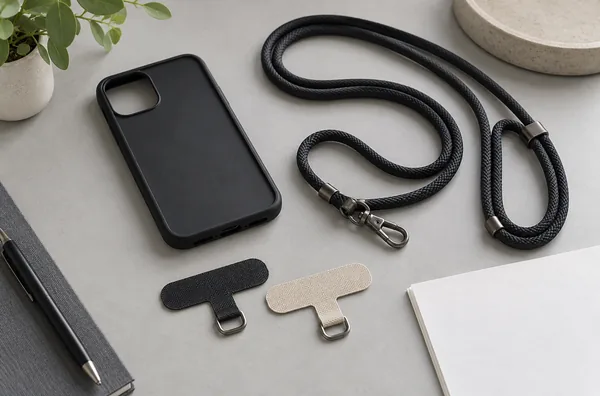
Before bundling a phone case with a lanyard, approve the complete attachment: the exact phone, case, anchor or tether tab, hook and strap. Check that the phone stays seated and the tab fits the case opening. Then check charging-cable access. Keep approval specific to that combination rather than describing every case in a range as compatible.
This guide is for brands and wholesale buyers adding a wrist or cross-body strap to a phone-case assortment. It separates built-in attachment points from insert tabs and sets out the fit records and supplier questions needed before a bulk order. It is not a load-rating standard or a guarantee against dropping a phone.
Identify the attachment design
Similar-looking straps can attach to cases in different ways. A purpose-designed case eyelet passes the load into the case structure. An insert tab usually sits between the phone and case, with its attachment loop extending through a case opening. The latter depends on both tab geometry and the surrounding case retaining it.
| Attachment approach | What the buyer must identify | What cannot be assumed |
|---|---|---|
| Purpose-designed case eyelet | Named case, eyelet location, permitted connector and installation instructions | That any hole, speaker opening or decorative loop is a load-bearing attachment |
| Insert tether tab through a port opening | Tab shape and thickness, case bottom geometry, exit position and phone seating | That every case with a charging opening will retain the tab |
| Strap supplied separately | Who supplies the compatible anchor and who approves the assembled bundle | That purchasing the strap alone establishes case compatibility |
Do not ask a customer to drill a case or improvise a fixing point. If the selected case has no approved attachment path, choose another combination or ask the supplier whether a purpose-designed option is available.
For insert tabs, check the bottom opening first
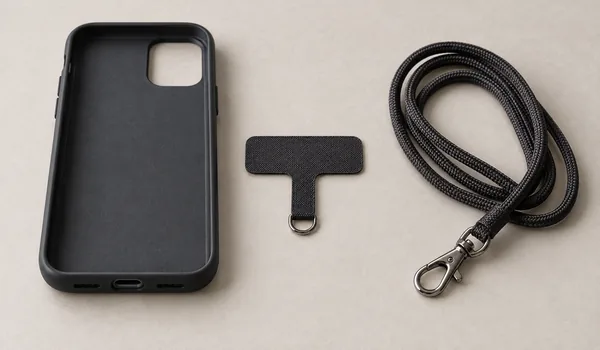
Read the instructions for the particular anchor. For example, TOIA’s tether-tab instructions specify a full-coverage case with a closed bottom and a small charging-port opening, excluding open-bottom cases and wide openings. Nite Ize’s Hitch anchor sits between the phone and case, with a small ring passing through the charging port; the supplier says standard-size port openings work best. These are product-specific statements, not a universal opening-size specification.
For your proposed bundle, record the following on photographs of an assembled sample:
- The phone model and case revision, including the bottom-edge shape.
- The tab’s internal footprint, exit section and position inside the case.
- Whether the case seats fully around all corners after the tab is installed.
- Whether the tab stays flat rather than folding under the phone or lifting a case edge.
- Whether the exposed loop clears the phone’s connector and the surrounding case material.
Check the assembled fit, not just tab thickness. Do not approve a combination that leaves the phone partially seated or visibly distorts the case. If the tab or case changes, revisit the approval rather than relying on the earlier sample.
Check cable access with the tab installed
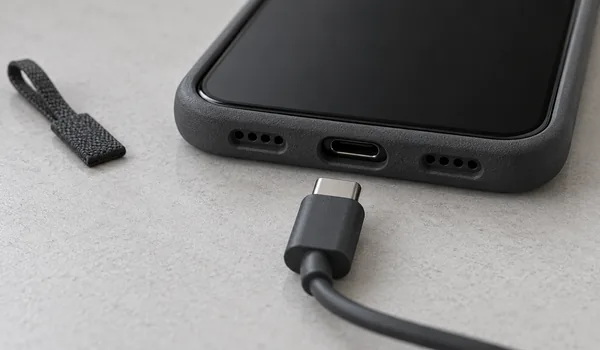
Use the actual cable families intended for the market, not only a bare connector drawing. Insert and remove the cable normally with the phone seated and the tab in its specified position. The plug should reach its normal seated position without pushing the tab aside, bending the exit section or forcing the case away from the handset.
Record the cable or connector-housing version used. A narrow plug fitting once does not establish clearance for every cable sold as USB-C. Likewise, a named anchor supplier’s wireless-charging statement does not validate a different tab, case or charger combination. If charging compatibility will appear on the packaging, agree the exact configurations and supporting checks before printing it.
Review the complete retention path
Ask the supplier to show how the strap connects to the hook, the hook to the anchor, and the anchor to the case. Include the phone’s retention inside the case. A strong cord cannot compensate for a connector that opens unintentionally, a tab that pulls through the opening or a case that lets the phone separate.
Separate fit checks from performance claims
Visual inspection can reveal incomplete hook closure, twisting, obvious abrasion or poor seating. It cannot establish a rated load or service life. If a seller proposes a strength or durability claim, request the underlying method and results for the complete named assembly.
Ask for a test proposal that identifies the loading direction, force or mass, duration, repetition count, fixture, sample quantity and acceptance criteria. It should also say whether a phone or a representative mass was used and what was inspected afterward. These are details to agree with the supplier or a competent test provider, not fixed values supplied by this article.
Agree when the bundle fails approval
Write observable rejection conditions: the hook does not close correctly, the tab shifts out of its intended position, the case no longer seats fully, the opening becomes damaged, or the phone separates under the agreed procedure. Match any marketing statement to the evidence actually obtained. Avoid calling a bundle drop-proof, anti-theft or suitable for safety-critical use based on a simple pull demonstration.
Specify installation and packing
A compatible combination can still be assembled incorrectly. For an insert-tab design, the supplier’s instructions should show where the tab lies, where its loop exits, how the phone is reseated and where the strap connects. Do not replace product-specific instructions with a generic diagram from a different anchor.
Decide whether the bundle ships preassembled or with separate parts. For separate parts, include an installation image and a way to identify the correct case and tab. For preassembled bundles, include a final check that the hook closes and the case seats correctly. Agree what customers should do if the tab frays, the connector deforms or the case opening is damaged; do not promise an unlimited service life.
Keep an approval record for each combination
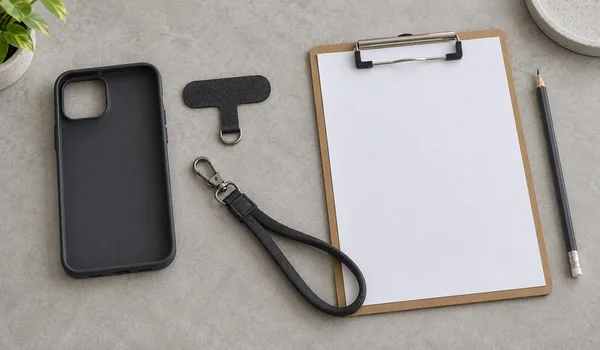
One approved phone size does not cover the whole assortment. Case openings, wall geometry and seating can differ between models, even when the case styling and strap are unchanged.
| Record | Why it matters |
|---|---|
| Phone model and case SKU/revision | Identifies the exact housing and opening assessed |
| Anchor or tab part/version | Prevents substitution based only on similar appearance |
| Hook and strap version | Connects approval to the complete attachment path |
| Installed photographs and instructions | Makes the accepted assembly reproducible |
| Cables and other claimed accessories | Defines the limits of compatibility wording |
| Agreed checks, results and approval owner | Shows what was verified and who must approve changes |
If a strap supplier and case supplier are different companies, name one party responsible for the finished bundle review. Do not let each component’s separate approval stand in for an assembled-sample decision. Use the wider phone-case sample approval checklist for cosmetic and general fit records; keep attachment-specific records alongside it.
What to send DUX DUCIS for a bundle enquiry
DUX DUCIS’s official brand site lists an Outdoor Series phone lanyard, while the OEM/ODM enquiry service covers buyer-defined phone cases and model-dependent customization. Neither fact means every case-and-lanyard combination is approved or that a particular attachment is available for your custom order.
Send the target phone models, selected case designs, strap and tab references, intended wrist or cross-body use, proposed quantities and destination market. State whether you need separate components or a packed bundle. Ask which exact combinations can be supplied for assessment, who supplies the anchor, what evidence supports any proposed claim and which changes require fresh approval.
Contact DUX DUCIS with that information before finalizing artwork or a bulk purchase order. Keep unconfirmed compatibility and performance language out of the packaging.
Frequently asked questions
1. Can any phone case accept a lanyard tab?
No. Check the tab supplier’s instructions and the exact case opening, internal space and phone seating. Some insert tabs exclude open-bottom cases or wide port openings. A charging-port cutout alone does not prove compatibility.
2. Is a built-in eyelet the same as an insert tab?
No. A purpose-designed eyelet transfers the attachment load through the case’s intended fixing point. An insert tab usually sits between the phone and case and exits through an opening. Each needs approval with the specified connector and strap.
3. What should be included in an approval sample?
Include the exact phone model, case revision, anchor or tab, hook and strap, plus the installation instructions. Add the cable versions and accessories relevant to any compatibility claims. Keep photographs and component identifiers with the approval record.
4. Can the tab obstruct charging?
It can interfere with access if its position or the case opening leaves insufficient clearance. Check normal cable insertion with the tab installed and the phone fully seated. Confirm any wireless-charging claim for the named assembly rather than borrowing another product’s statement.
5. Does a strong strap prove that the phone will stay attached?
No. The complete retention path includes the strap, hook, anchor, case opening and phone retention inside the case. Evidence for one component does not establish the performance of the assembled bundle.
6. What force should a buyer specify for a retention test?
There is no universal value established by this guide. Agree a method suited to the intended use with the supplier or a competent test provider, including force, direction, duration, repetition, samples and acceptance criteria. Do not invent a load rating from an informal demonstration.
7. Must every phone model in a bundle range be checked?
Keep approval tied to each named case-and-phone combination. Different models can have different openings, wall geometry and seating. If a supplier proposes grouping models, ask for the technical basis and evidence rather than assuming identical compatibility.
8. Can DUX DUCIS supply a custom case-and-lanyard bundle?
Ask about the exact case, attachment, strap and packing arrangement. DUX DUCIS lists phone lanyards on its official brand site and accepts model-dependent OEM/ODM case enquiries, but custom bundle availability and compatibility require project-specific confirmation.