



Wallet Phone Case Capacity: Card Retention and Closure Checks for OEM Buyers
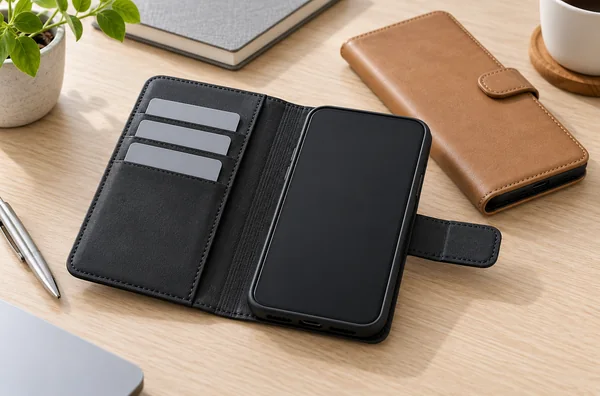
For a wallet phone case order, specify the cards the case must hold, where they go and how the cover must close with the phone installed. Approve that loaded configuration, not just the number of visible pockets. Check access and retention as well as closure. A case can hold the advertised number of cards yet be awkward to use or fail to close as intended.
The checks below are a proposed purchasing review, not a laboratory test or a universal capacity rating for DUX DUCIS folios.
Define capacity before comparing wallet cases
The DUX DUCIS case-style guide includes wallet and folio projects and asks buyers to specify card slots, closure, lining and cover finish. A card slot is a physical pocket. Capacity describes the load the complete case can accommodate while meeting the agreed closure and usability requirements.
The official Skin Pro page for iPhone 15 Pro describes a card holder. It does not state a card count, so that page alone cannot establish an approved loading limit. Confirm the selected device, case reference and current configuration in the quotation.
Storage designs differ. Spigen describes a two-card sliding compartment for its Galaxy S25 Ultra Slim Armor CS, while OtterBox describes an internal card holder and magnetic cover fastening on its iPhone 13 Pro Strada Via. These are examples of different constructions, not specifications for DUX DUCIS cases.
Describe the cards you intend to carry
Record the card dimensions, thickness and any raised features that matter to the intended assortment. Identify whether cards are used bare or in sleeves. If cash or a folded receipt is required, list it separately, including how it is folded and where it should be stored. Do not treat an additional pocket as permission to add an unspecified amount of paper.
Use blank representative cards for the review rather than collecting customers’ payment-card details. A photograph of the loading arrangement and a simple card reference list are enough to identify the proposed configuration.
Compare unloaded and loaded closure
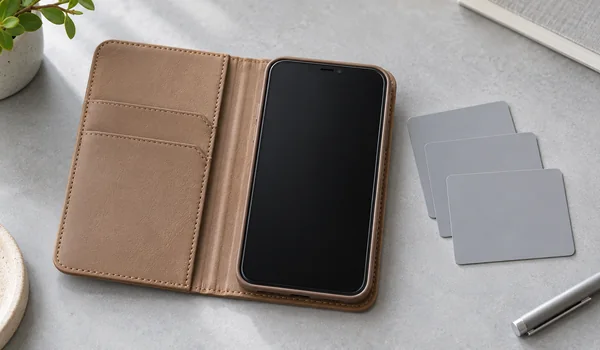
Install the exact intended handset before checking the cover. First observe the empty folio, then add the agreed cards to their assigned pockets. Close it using the intended action, without squeezing the assembly into a position it cannot maintain on its own.
| Configuration | What to observe | What to record |
|---|---|---|
| Phone installed; pockets empty | Cover alignment, closure engagement and any existing gap | The unloaded reference condition |
| Normal intended card load | Cover bowing, closure reach and unwanted contact with the screen | Card placement and acceptable closed condition |
| Maximum proposed load | Whether closure, card access and retention still work together | Supported load or a lower limit needing approval |
| Cards plus separately requested cash | Changes caused by the additional folded material | Whether this combined configuration is supported |
| One card after removing the others | Whether the remaining card stays held and accessible | Any restriction on using a partly filled pocket |
This is a suggested buyer review, not a standardized test. Agree sample quantities, handling steps and acceptance criteria with the supplier. If a gap is permitted, define where and how it is assessed; do not invent a universal millimeter limit.
A magnetic tab, snap and cover without a separate fastening mechanism require different closure descriptions. Ask what the selected design is supposed to do. “Magnetic closure” does not specify the allowed load or prove that the cover stays closed under every handling condition.
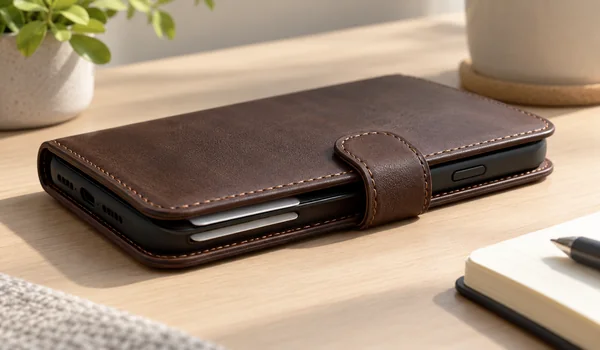
Check card retention and access separately
Review each pocket with the agreed minimum and maximum load. Check whether a card can be inserted and removed using the intended finger opening, and whether adjacent cards come out with it. A tight pocket is not automatically a good result if a customer must bend the cover sharply or strain the stitching to retrieve a card.
Agree ordinary handling positions for the retention review and use a protected surface beneath the sample. Record whether a card shifts, protrudes farther or leaves its pocket. Do not turn this into a drop test or claim anti-theft performance. The result applies to the reviewed card set and handling procedure.
Review the partly emptied pocket
After evaluating the full load, remove cards and repeat the agreed access and retention checks with the smaller load. Does the remaining card still stay in place? Record the sequence so a supplier can reproduce the observation rather than receiving only the comment “too loose.”
Inspect the pocket mouth, lining, edges and seams for visible changes. If longer-term retention is part of the brief, agree a separate repeated-use procedure, including loading, insertion and removal actions, cycle count and end-of-review criteria. A few manual checks cannot establish a service life.
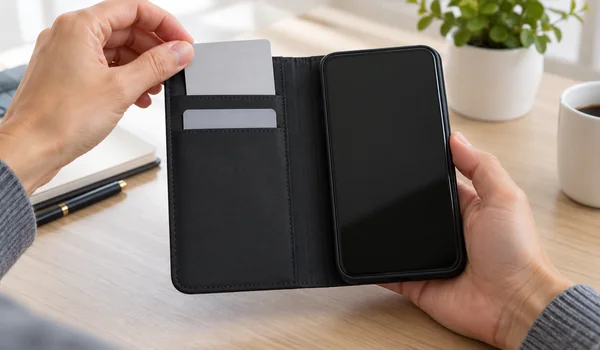
Keep other folio functions outside the capacity claim
With the proposed load in place, check that the cover can move to its intended positions without obstructing the camera or interfering with normal handling. If the folio also acts as a stand, review that function with the relevant loaded configuration. Approval of card storage does not establish stand stability; use the separate stand-function review where needed.
Charging and card-storage claims also need separate treatment. Do not assume that closing a loaded folio around a phone proves wireless-charging compatibility. Follow the phone and charger manufacturers’ instructions and confirm the exact case configuration. The magnetic compatibility guide covers that separate review; no charging performance or card-protection claim is established here.
Use loading instructions that match the approved case
Keep the final capacity statement tied to the case reference and device model. If the accepted arrangement is one card per specified slot, say so instead of describing every pocket as expandable. If cash was not reviewed, do not add “cards and cash” to the retail copy simply because a larger compartment is visible.
Where capacity varies across sizes or constructions, keep separate records. A series name or similar appearance does not establish that every folio shares the same pocket geometry, closure reach or loading limit.
Ask for another review when a proposed revision changes the pocket dimensions, lining, cover construction or closure. Record whether the existing loading instruction remains valid. This is a focused addition to the sample approval record, not a replacement for the broader fit and shipment checks.
Send a card-storage brief with your enquiry
For a DUX DUCIS OEM or private-label enquiry, send the exact devices, case references, quantities and intended card arrangement. Include the proposed normal and maximum loads, any cash requirement, closure expectations and the handling checks you want to agree.
Ask which requirements the current design can support and which remain unconfirmed. Keep the confirmed loading instruction with the selected case reference and acceptance record. Leave the capacity claim pending if the supplier has not confirmed it.
Frequently asked questions
1. Is the number of card slots the same as wallet case capacity?
No. Slots describe the pocket layout. Capacity needs a defined card load that the complete phone-and-case assembly can hold while meeting the agreed closure, retention and access requirements. Confirm card placement and loading limits rather than assuming every slot accepts several cards.
2. Should the phone be installed during the closure check?
Yes. Use the exact intended handset and compare unloaded and loaded conditions. The empty case alone does not show how the assembled folio closes. Record cover alignment, closure engagement and any agreed gap without forcing the cover into place.
3. Why should buyers identify the cards used in a review?
Card thickness, dimensions, sleeves and raised features can change the load. Use identified blank representative cards and record their placement. This makes the review repeatable without collecting real payment-card details or assuming every card combination is equivalent.
4. Does a magnetic closure guarantee that a full wallet case stays closed?
No. The closure type does not establish the permitted load or performance under every handling condition. Review the selected case with its intended phone and cards, and agree what counts as proper engagement and an acceptable closed condition.
5. Why check a pocket again after removing some cards?
A partly filled pocket may behave differently from the same pocket at its maximum load. Repeat the agreed retention and access checks after removing cards and record the sequence. Do not use a full-pocket result to approve every smaller load automatically.
6. Can cash capacity be included in a card-capacity claim?
Only if that combined arrangement has been defined and reviewed. State the folded material, placement and card load used. An extra compartment does not establish how much cash can be added while preserving closure, access and retention.
7. Do a few insertion and removal checks prove long-term durability?
No. They can reveal immediate usability or construction issues but cannot establish service life. If repeated-use performance matters, agree a separate procedure covering the card load, actions, cycle count and acceptable changes to the pocket, lining, seams and retention.
8. Can all models in one folio series use the same capacity statement?
Only when its scope is confirmed for every included configuration. Device size, pocket layout, lining and closure can vary. Map the accepted loading instruction to the relevant case references and review it again when those details change.