



Утверждение гнёзд пресс-формы для чехлов: 5 проверок перед серийным выпуском
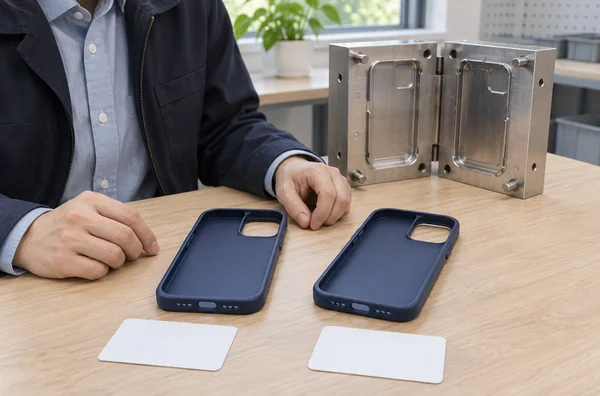
If an injection mold has more than one cavity, ask for samples from every cavity that will supply your phone case order. Review each group separately against the same approved drawing, fit checks and appearance limits. One case that fits the phone well cannot show what the other cavities produce.
Start here when commissioning a tool, moving production to a different tool or returning a repaired insert to service. If you’re buying an existing wholesale design, ask which tools and cavities supply it before requesting records. The steps below are a buyer’s review, not a description of how a particular DUX DUCIS case is molded.
1. Identify which cavity makes which part
A cavity is a space in the mold that shapes a part. A multi-cavity tool can produce more than one part in a cycle. A family mold can produce different components in the same cycle. Protolabs explains the difference between family and multi-cavity tooling. Before requesting samples, ask for a map that links the tool, insert and cavity IDs to the part revision and device model. Mark any cavities the supplier does not intend to run.
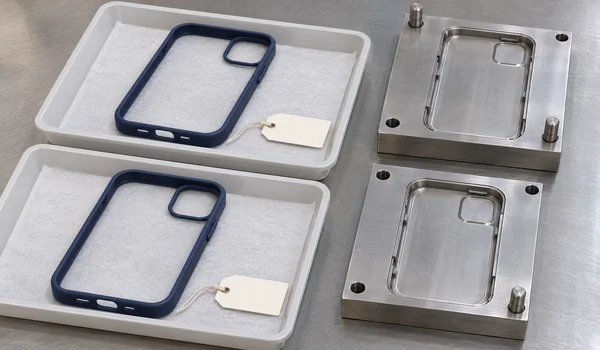
Treat the molded frame, back shell and separate buttons as different components if they come from different tools. A cavity number that identifies the back shell tells you nothing about where the frame came from. If a molded ID is not suitable on a visible surface, agree how the supplier can reliably keep trial samples separate and trace them back to the cavity. Confirm the planned level of traceability for production separately.
The phone case mold cost guide covers what tooling charges and trial deliverables buy. Once trial parts arrive, check which cavity made each one.
2. Ask for identified samples from the intended build
Request samples from a documented trial using the proposed material and finish. Ask the supplier to identify the process or trial record, the tool and insert revision, and which samples came from which cavity. Separate early setup pieces from the parts you are using for a release decision. If samples were polished, trimmed, coated or otherwise changed outside the normal process, record that work. A polished trial part is a poor reference if production parts will not get that same treatment.
Agree the sample count, selection method and timing before the trial. You may need a different plan for dimensional checks, appearance and assembled fit. There is no universal sample count for all molds or cases. A repeat sample can help distinguish a one-off mark from a pattern, but a few good pieces do not establish long-term process capability.
3. Compare the same checks across cavities
Use the same drawing revision, reference device and inspection method across samples. Agree how flexible parts will be supported when measured. Compressing a flexible edge with a gauge or holding it flat by hand can change the reading. The ISO 20457 overview describes dimensional and geometrical tolerances for molded plastic parts; it is not a phone case fit specification. Use the project drawing to define the dimensions that matter and the approved limits to judge them.
| Check to record by cavity | What to compare | What a pooled result can miss |
|---|---|---|
| Corner seating and sidewall shape | A correctly identified handset and agreed fitting method; note each corner or edge that lifts | One cavity can produce a corner that does not seat even when the rest of the samples fit |
| Camera or port opening position | The drawing references and an assembled clearance check on the target device | An opening can meet its width check yet sit in the wrong place |
| Button response, where applicable | A fully seated case on the same handset; check press and return as agreed | A working sample from one cavity does not clear a sticky control on another |
| Finish on specified surfaces | Physical limit samples or annotated photos under agreed viewing conditions | A repeated witness mark on a visible area can be diluted in a mixed sample |
Keep an appearance decision distinct from a fit or handling decision. A shallow gate mark on an inner face may be acceptable if it meets the agreed limits and does not affect seating or touch. A projection that presses against the handset needs a separate review. Protolabs’ molded-part cosmetics guide explains why gate placement and ejection can leave different marks. Use the case cosmetic inspection guide for appearance zones and the agreed boundary between acceptable and rejectable parts.
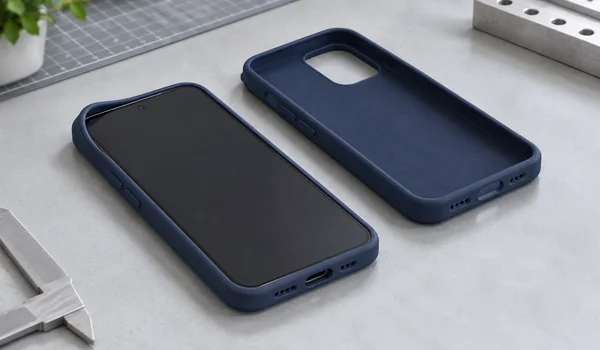
4. Decide which cavities can run
Record results by cavity, including which samples were checked and which checks remain open. Do not average away a poor fit. For example, a narrow opening from one cavity and a wide opening from another can produce an acceptable average even when an individual part fails.
Suppose a protective frame comes from cavities A and B. Both groups meet the agreed camera-opening width. Frames from cavity B lift at one corner on the reference phone, while those from cavity A seat properly. The buyer holds B and asks the supplier to check the geometry around that corner. A can be considered separately only if the supplier can keep its output isolated, the tool can run in the proposed configuration, and the buyer approves that arrangement. If disabling B changes the process, confirm the evidence required for the changed setup before accepting parts made in that setup. If the stock is already mixed and cannot be identified, hold the wider group while it is investigated.
Tool acceptance and finished-case approval are separate. For a case assembled from multiple parts, check the planned assembly combinations as agreed, rather than assuming that two approved components are always interchangeable. Use the OEM phone case sample approval checklist to document the full case and packaging after the cavity-level review.
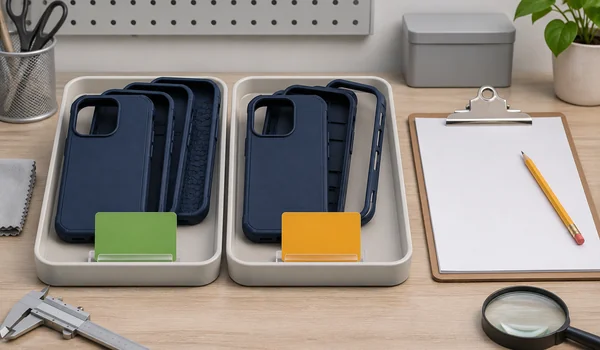
5. Agree what happens after a tool change
Write down which events trigger a review: insert replacement, cavity repair, a transfer to another tool or a change that affects the approved material, geometry or surface. Ask the supplier to identify the first affected run and the inventory that might contain parts from before or after the change. Base the recheck on what changed and what else it could affect. A repair near a port may call for an opening-position and connector-access review; a change to a visible cavity surface may also call for an appearance check.
Before raising an OEM or private-label enquiry, send the exact phone model, case or component reference, proposed material and finish, and the fit features that matter to your product. Ask which tooling and cavity records are available for that project, what evidence would accompany a production sample, and who would authorize a reworked cavity for use. Do not assume the supplier can produce the same records for an existing wholesale design and a new buyer-defined tool.
Frequently asked questions
1. What is phone case mold cavity approval?
It is a buyer and supplier decision on which identified cavities can make a specified case component. The decision links samples and inspection results to the tool, cavity, component and revision.
2. Does a new phone case tool always have several cavities?
No. Tools can have one cavity or several. The supplier should identify the planned tool and active cavities for the selected part.
3. Can I approve every cavity from one golden sample?
One golden sample can define the intended appearance or fit, but cannot show what each cavity produces. Compare identified samples from every cavity proposed for release with the agreed requirements.
4. Do we need a visible cavity number on the finished case?
Not necessarily. Agree an identification method suitable for the part and the required traceability. A hidden mark or documented segregation may help. Ask how the link survives assembly and packing.
5. What measurements should I request for each cavity?
Start with the features that affect seating, opening position and control operation. Specify drawing references, support or fixture, measurement method and acceptance limits. Use the actual handset for relevant assembled checks.
6. Can one cavity run while another is on hold?
Only if the supplier can support that operating setup, keep approved output separate and show that the applicable requirements still hold. Obtain written approval before using the revised setup.
7. Can a standard AQL inspection replace cavity approval?
Not by itself. A lot inspection answers whether a defined lot meets an agreed sampling rule. Cavity approval asks whether the named sources of parts have evidence for release. Plan both separately when your order calls for both.
8. When should a repaired cavity be checked again?
Review it before its output is used when the repair may affect an approved feature. Identify the changed area, confirm the affected groups and repeat the checks needed to support release.