

/* Hide this article’s detail-page featured image; keep archive thumbnails. */
body.single-post.postid-61568 #post-61568 > .bs-img { display: none !important; }
How to Choose an OEM Phone Case Manufacturer: A Buyer’s Checklist
When choosing an OEM phone case manufacturer, start with the specification behind the price. Does the case fit the exact phone model? What materials are used? What does the quoted customization cover? A cheaper quote is hard to judge if it includes different packaging or a different mix of models.
For brands, distributors, importers, and wholesale buyers, the checks below cover the decisions that need to be settled before an order: device fit, construction, customization, minimum quantities, sample approval, documentation, and timing.
Start with a sourcing brief that suppliers can quote
Give each shortlisted supplier the same sourcing brief. The list below covers the details they need to quote. Reference images help too, provided you explain what you want to keep: perhaps the grip, camera surround, stand, or surface finish.
Be clear about what can change. Compatibility with a specific charger or screen protector may be essential to your launch; the color may be flexible. Have the supplier list substitutions and exclusions in the quote so you can see where it differs from your brief.
- Device list: full model names and any relevant regional model numbers.
- Order breakdown: units per device, color, design, and packaging version.
- Product definition: materials, components, finish, functions, and reference dimensions where needed.
- Branding files: logo artwork, placement, dimensions, and color references.
- Commercial requirements: destination, delivery term, payment milestones, and required arrival date.
- Evidence required: sample plan, inspection criteria, and documents relevant to your product and market.
1. Confirm exact device fit before discussing volume
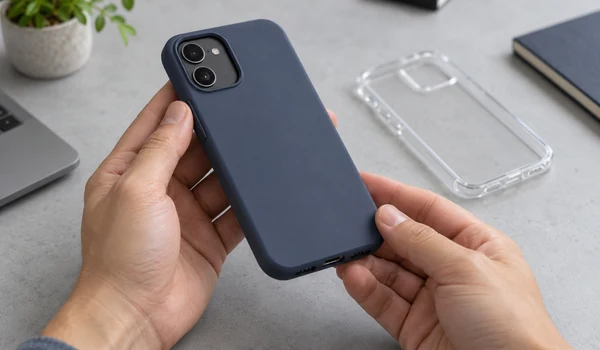
A listing for a phone family doesn’t confirm fit for every model in it. Get the exact case SKU or mold reference for each device you plan to order. Similar model names, screen sizes, and launch dates are not enough to establish that the cases are interchangeable.
Try the case on the intended phone. Check camera clearance, buttons, microphone and speaker openings, and access to the charging port. Does the case stay secure around the edges, and can you remove it without difficulty? Open and close foldable phones fully to check for hinge-cover interference. Record which screen protector and cable you used when those accessories are part of the fit requirement.
Separate magnetic attachment from wireless charging
A magnetic ring can hold a case to an accessory without proving that the charging setup works as intended. Request the test details: phone, charger, case configuration, and measured result. Seeing a charging icon tells you less than a test of the charging speed being claimed.
Apple’s wireless-charging guidance notes that thick, metal, or battery cases can affect charging and recommends removing them when charging is slow or fails. Use that guidance to define a practical compatibility check for the exact combination you intend to sell. Avoid treating “magnetic,” “MagSafe-compatible,” and certified performance claims as interchangeable descriptions.
Approve each device SKU after checking fit and the required accessories. If a check is still pending, record it as an explicit condition of approval.
2. Specify the construction behind the material name
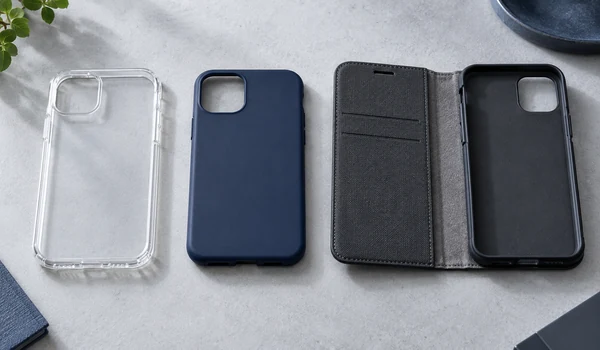
“TPU case,” “PC case,” and “leather case” leave a lot unspecified. The frame, back panel, lining, buttons, and any stand or magnetic assembly may use different materials. Get a description of each component. For a leather-look surface, establish whether it is polyurethane, another synthetic material, or genuine leather, then use that wording on the packaging.
Cases with the same main material can still differ in wall thickness, hardness, coating, texture, adhesive, and assembly. A finished sample helps you assess those differences alongside the component specification. Before using claims such as yellowing resistance or drop protection, agree what the claim means and what test evidence will support it.
For any performance report, review the test method, specimen description, conditioning, duration or number of cycles, and acceptance criteria. A report for a different color, coating, or construction may not support your chosen version. Agree how material or process changes will be communicated after approval.
3. Define exactly what “custom” includes
Suppliers don’t always mean the same thing by OEM, ODM, or private label. Describe the work you need. Printing a logo on an existing design calls for different decisions from changing the case structure or developing a new mold.
- Existing design with branding: confirm logo process, print area, artwork preparation, packaging, and available colors.
- Modified existing design: identify which components, finishes, or functions change and whether new samples or tooling are needed.
- New design or tooling: agree design deliverables, development milestones, tooling charges, ownership and permitted use, maintenance, and revision costs.
The quote should show the unit price separately from artwork, samples, tooling, packaging development, testing, and other one-time charges. If you are paying for a new mold, settle who can use it and what happens if you move production. These terms belong in the agreement before development begins.
Review the OEM / ODM customization options when preparing a DUX DUCIS inquiry, and specify which changes you need.
4. Separate order MOQ from model, color, and packaging minimums
A minimum order quantity (MOQ) may apply to the whole order, an individual device model, or a case design. Colors, logo processes, custom materials, and printed packaging can have their own minimums. You need to know which of these limits applies to your assortment.
Suppose you plan to buy 500 cases across five phone models and two colors. An even split is 50 units of each model-color combination. That is your proposed breakdown, not confirmation that the supplier accepts it. Send the full quantity matrix for approval.
DUX DUCIS states a 500-piece total order minimum with mixed models and colors in its ordering FAQ. Confirm the eligible designs and allocation in your quotation. Do not assume the same minimum applies to new tooling, custom material colors, or every packaging project.
Check replenishment terms while you are discussing the first order. If one model sells slowly, can you reorder a smaller quantity of it? Confirm how long the quote remains valid and whether a new color or packaging version changes the minimum.
5. Approve a sample against written acceptance criteria
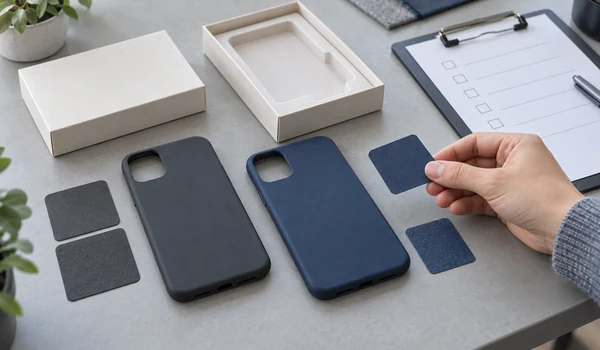
Before reviewing a sample, find out what it represents. A stock sample may show the finish and construction while using a different device mold, color, logo, or packaging. Have the supplier identify which details match your planned production version and which are still provisional.
Build a sample approval record
- Identification: supplier SKU, device model, sample version, date, color reference, and artwork version.
- Fit and function: button response, port access, camera clearance, retention, stand operation, hinge movement, and agreed accessory compatibility.
- Appearance: approved color reference, logo size and position, print clarity, seams, surface marks, and finish.
- Packaging: artwork, device naming, barcode scan result, contents, carton allocation, and any required labels.
- Performance: agreed test method and acceptance criteria for each claim you plan to make.
- Disposition: approved, approved subject to listed corrections, or rejected, with an owner for every unresolved item.
Photograph the approved sample and keep a physical reference where practical. Get written confirmation that bulk production will follow that version. A later change to fit, material, artwork, or function may need another physical sample; “same as before” leaves too much open to interpretation.
Sample approval doesn’t replace shipment inspection. Agree when bulk goods will be checked, the sampling plan, what counts as a defect, and what happens if the inspection fails. “Good quality” gives neither party a usable acceptance standard.
6. Match compliance documents to the product and destination
Start with the destination market and product configuration, then identify the relevant requirements with your importer, qualified compliance adviser, or testing laboratory. A passive protective case and a case containing powered electronics can raise different questions. This checklist supports sourcing due diligence; it is not a legal determination of compliance.
The European Commission describes RoHS as rules for electrical and electronic equipment. Ask what a supplier’s RoHS-related document actually covers and why it is relevant to your product. A material test result should not be presented as blanket market approval.
ECHA’s SCIP information addresses articles containing Candidate List substances above 0.1% by weight placed on the EU market. Ask your compliance adviser which chemical-information and notification duties apply to your supply chain, and request evidence for the actual materials supplied.
Check what the report covers
Read the report against your purchase specification. Check the applicant and manufacturer, laboratory, report number and date, tested item, photographs, material and color references, methods, limits, and results. If the identifiers don’t match your sample, request a documented explanation or an updated test plan.
Keep management-system certificates separate from product test reports. A company-level certificate, where valid and relevant, does not prove a particular case passed a drop test or meets every market requirement. Likewise, an inspection video does not establish who owns a production facility. Ask who will perform molding, printing, assembly, and inspection, including outsourced steps. The DUX DUCIS manufacturing overview can help frame those process questions.
7. Build a schedule from approval to arrival
What starts the quoted production lead time? It might be the deposit, approved artwork, sample sign-off, material availability, or packaging readiness. Confirm which conditions apply and put them in writing.
DUX DUCIS gives a typical production lead time of 15–30 days, subject to the order. Use that range for early planning, then get a schedule for your project. New tooling, development, sample revisions, quantity, and customization can change it. International transit, customs clearance, and final delivery are additional.
Work backward from the date the goods must arrive. Allow time for development, sample transport and review, production, inspection and corrections, freight, customs, and local delivery. The quote should name the delivery term and place, who arranges freight, and which costs are included. Put quotes on the same landed-cost basis before comparing them.
Give each milestone an owner, a start condition, and an agreed handoff. If you need stock ready for sale on a particular day, check the arrival schedule as well as the promised shipping date.
Supplier comparison checklist
Use this table for each supplier. Mark missing details as “unconfirmed” so they remain visible when you compare prices.
| Area | Request from each supplier | Resolve before approval |
|---|---|---|
| Device fit | Exact model-to-SKU list and fit sample | Untested devices or accessory combinations |
| Construction | Component materials, finish, and approved specification | Unspecified coatings or substitutions |
| Customization | Scope, artwork, development charges, and tooling terms | Unclear ownership or revision costs |
| MOQ | Confirmed quantities by model, color, and packaging | Order minimum confused with per-SKU minimum |
| Quality approval | Sample record and bulk inspection plan | Provisional features or undefined defects |
| Documentation | Applicable reports tied to the supplied product | Different materials, models, or unsupported claims |
| Timing and cost | Milestones, delivery term, named place, and exclusions | Transit omitted or start conditions unresolved |
Resolve the gaps that affect your order before choosing a supplier. Where an exception is acceptable, record exactly what you have agreed and reflect it in the price comparison.
Frequently asked questions
1. What is the difference between OEM, ODM, and private-label phone cases?
Private label commonly means adding your branding to an existing product. ODM often starts with a supplier-developed design, while OEM may involve manufacturing to your specification. Usage varies, so the quote still needs to define the design work, modifications, intellectual-property terms, tooling, and deliverables.
2. What should I send to get a comparable quotation?
Send exact phone models, quantities by model and color, case construction, logo requirements, packaging, destination, and required arrival date. Request a list of exclusions or substitutions with the quote. If a supplier quotes a different model mix or packaging, get that corrected before comparing prices.
3. Can different phone models and colors share one MOQ?
Sometimes, but it depends on the design and customization. Confirm the order-level minimum and each model, color, printing, and packaging minimum. DUX DUCIS states a 500-piece total minimum with mixed models and colors; request confirmation that your specific assortment qualifies.
4. Does a sample prove that bulk production will be identical?
No. A sample is a reference for the details it actually represents. Record its version, materials, artwork, fit, and any corrections still needed. Agree how changes will be controlled during production and how the shipment will be inspected. Custom features missing from a stock sample still need approval.
5. Which certificates should an OEM phone case manufacturer provide?
The documents depend on the product and destination market. Identify the applicable requirements, then request the relevant reports and declarations. Check what was tested and what the documents cover. A company-level certificate does not replace a report for the product you are buying.
6. Does a magnetic phone case automatically support wireless charging?
No. Magnetic attachment and charging compatibility need separate checks. Verify the exact phone, case, charger, adapter, and intended use configuration. Request evidence for any claimed charging performance, and avoid adding certification language unless the applicable product and claim are supported.
7. How long does an OEM phone case order take?
The schedule depends on design readiness, tooling, materials, sample approval, quantity, and packaging. DUX DUCIS lists a typical 15–30-day production range, subject to order confirmation. Obtain a written start condition and milestones; add development, inspection, shipping, customs, and final delivery separately.
8. How can I compare suppliers when their prices are very different?
First check whether the quotes cover the same order. Match the model quantities, materials, customization, packaging, inspection scope, delivery terms, and payment assumptions. Keep one-time development charges separate from repeat unit costs. Then ask suppliers to explain the remaining price differences.
9. What should I confirm before a repeat order?
Use the approved product and artwork versions as references. Confirm the new quantity mix, price, minimums, and lead time, and check whether any materials, tooling, processes, or packaging have changed. Changes that affect fit, appearance, function, or a compliance claim need the relevant sample or evidence reviewed before release.
Prepare your DUX DUCIS sourcing inquiry
Choose relevant designs from the phone case catalog and prepare your quantities by model and color. Send that breakdown, your specifications, and any unresolved questions through the DUX DUCIS contact page. The team can then confirm customization, eligible model mixing, samples, and pricing for your order.