







Phone Case MOQ: How to Plan a Mixed-Model Wholesale Order
To plan a mixed-model phone case order, build the quantity breakdown first and ask the supplier to confirm that exact mix against its minimum order quantity (MOQ). A total of 500 cases does not tell you how many units you will receive for each device, color or design. Carry the approved line items through the quotation, purchase order and shipment.
DUX DUCIS states a 500-piece total order minimum with mixed models and colors allowed. Its OEM/ODM service page treats new development and tooling separately. Use that published minimum as the starting point for an inquiry, then obtain confirmation of the selected products, allocation and customization. It is not a guarantee that every catalog combination is available in any quantity.
Separate the order minimum from the assortment you need
A mixed-model order lets a buyer combine several case variants in one purchase. Each variant still needs an identity and quantity. If one design covers three devices in two colors, there are six model-color combinations to confirm. Adding a second design can double the number of lines even though the order total stays unchanged.
Ask what each minimum applies to. An order-level MOQ, a production batch for a custom color, a logo setup and a printed packaging run describe different constraints. A supplier may accept the overall assortment while proposing changes to one of those components. Have the quotation show the exception rather than leaving it inside a general “MOQ confirmed” reply.
- For existing wholesale designs, confirm the current device, series and color availability for each line.
- For private-label versions, confirm which branding or packaging changes apply to which quantities.
- For new construction or tooling, request a separate development scope and its quantity assumptions.
Keep optional designs outside the committed total until they are accepted. A request for 400 confirmed units plus 100 units of an unavailable model has not become a confirmed 500-piece assortment.
Choose the mix from your sales channel, not an equal split
Start with the exact phones your customers use and the case styles you intend to sell. Use your own sales, retailer commitments and current inventory where available. A popular phone globally may still be a weak seller in your particular stores or market. Keep device, color and design information together rather than allocating quantities only by phone brand.
Review stock at variant level. Separate sellable, uncommitted units from damaged, held or already allocated goods, and list confirmed incoming stock separately. Shopify’s inventory-report documentation, for example, distinguishes inventory states and reports sales by product variant. Check what your own report includes before treating a headline stock figure as available supply.
Recent sales can help identify a starting mix, but note stockouts, promotions and changes in distribution. A variant that was unavailable for half the period has not had the same selling opportunity as one continuously in stock. For a new range, label the allocation as a trial assumption and set a review date. Do not invent a demand percentage merely to make the quantities add up.
Also check margin, cash commitment and the likely need for clearance. Shopify’s ABC report uses revenue contribution rather than item cost, so its grade alone does not settle those decisions. A high-revenue line can still need a separate margin review. No sales forecast for a DUX DUCIS product is implied.

Build a line-by-line quantity matrix
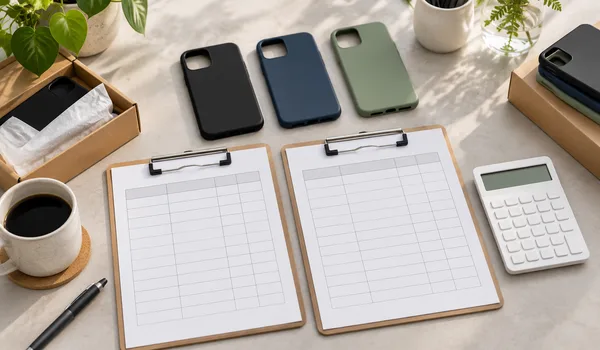
Give each row the buyer SKU, supplier case reference, full device name, color or finish reference and requested quantity. Add the branding and packaging version if they differ. Use full device identifiers in the actual inquiry; the short labels below are only an arithmetic example.
The following hypothetical plan totals 500 units. It is not a recommended sales mix, a DUX DUCIS quotation or confirmation that a 20-unit line is accepted. It shows how the same total can conceal a changed assortment.
| Illustrative device | Color | Requested units | Revised quote units | Difference |
|---|---|---|---|---|
| Device A | Black | 180 | 180 | 0 |
| Device A | Navy | 100 | 100 | 0 |
| Device B | Black | 90 | 100 | +10 |
| Device B | Navy | 60 | 60 | 0 |
| Device C | Black | 50 | 40 | −10 |
| Device C | Navy | 20 | 20 | 0 |
| Total | 500 | 500 | 0 |
Both columns meet the same total. The revised quote nevertheless removes ten units from one line and adds them to another. If the buyer checks only “500 pieces,” the change can pass unnoticed. Require a reason for each difference and accept or reject it explicitly.
Keep requested, quoted and finally approved quantities in separate columns. Do not overwrite the original request when a supplier proposes an alternative. Record unavailable lines, proposed substitutions and whether an omitted item remains open or has been removed from the order.
Check rounding and packing quantities separately
If the supplier requests a packing multiple, show it per line and recalculate the total after rounding. Ask whether it is a product-order requirement, an inner-pack quantity or simply a preferred carton arrangement. Those are not necessarily the same rule.
Do not add a slow-moving color just to fill a carton without comparing the cost of that stock with an alternative packing plan. The phone case packaging guide covers labels and carton contents. This quantity matrix should feed that packing record once the assortment is approved.
Compare the complete quoted mix and cost
Request unit prices by line when variants have different prices. Multiply each approved quantity by its own unit price, then add separately identified setup, samples, tooling, packaging and other agreed charges. A blended price is useful only if you know the assortment on which it was calculated.
A later shift toward a more expensive design can change the total even when the number of units stays the same. Conversely, a lower quote may have removed a case feature, changed a color or excluded packaging. Resolve those changes before deciding that the supplier has offered a better price.
Use the same destination and shipping basis when comparing proposals. Identify which transport costs are included and which remain estimates. Keep the cost of buying excess units visible; a lower unit price does not automatically reduce the cash required for the order.
What if the useful assortment is below the minimum?
First check whether there are other confirmed needs that can share the order. Add units only where there is a planned sales requirement. Avoid assuming that a customer will take a new color or device simply because it fills the gap.
Ask the supplier to assess a smaller selection of existing designs, a simpler branding scope or an alternative packaging arrangement where those changes suit the business. Another option is to wait until demand supports the order. These are proposals to discuss, not promised exceptions to DUX DUCIS’s published minimum.
If the supplier offers a lower quantity with different pricing, record the revised terms in writing. If it proposes producing extra packaging or components for later orders, specify the quantity, cost, ownership, storage and treatment of obsolete stock. Do not count unused packaging as finished phone cases unless the quotation expressly identifies what is being purchased.
Plan replenishment before approving the first order
Ask how repeat orders are quoted. Can the next purchase use a different model-color mix? Which existing product references remain available? Does a new logo, color or package create a separate setup? Confirm the current minimum and availability again rather than assuming the first order’s allocation becomes a permanent entitlement.
Review quantities after stock reaches the intended sales channel. Track sales, returns, stockouts and remaining usable stock by SKU. Distinguish a genuinely slow line from one that has not reached stores or was incorrectly listed. Agree an internal review point so the next inquiry is based on observations rather than the original launch guess.
Allow for the full replenishment interval. DUX DUCIS publishes a typical production range of 15–30 days, subject to the order. Confirm the production start conditions and dispatch plan; sample work, transport and arrival are separate considerations. Do not treat the published range as a guaranteed warehouse-delivery date.
Send DUX DUCIS an assortment that can be confirmed
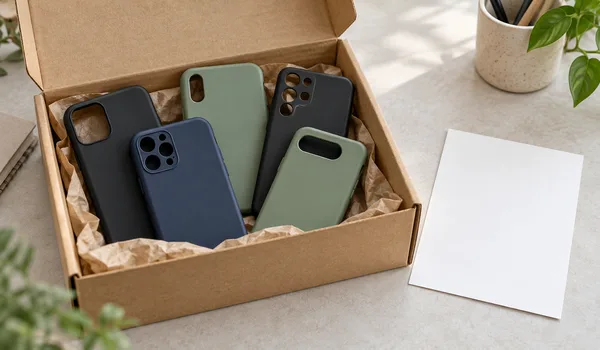
Attach the quantity matrix to your DUX DUCIS wholesale or OEM inquiry. Include the target market, case references, device names, colors, branding, packaging and required arrival date. Mark which lines are essential and which alternatives you would consider.
Ask the response to confirm every line, identify exceptions and state the total. Before ordering, retain one approved version shared by purchasing, the supplier and the receiving team. Product approval remains a separate step: the sample approval checklist covers fit, function and the physical reference. A commercially accepted quantity mix does not approve an untested case.
Frequently asked questions
1. What is DUX DUCIS’s phone case MOQ?
The published minimum is 500 pieces per order in total, with mixed models and colors allowed. Send the exact case references and quantities by device and color for confirmation. New development, tooling and project-specific customization requirements need their own quotation review.
2. Does a 500-piece minimum mean 500 pieces of every model?
DUX DUCIS describes its 500-piece minimum as an order total, not a requirement for 500 pieces of each model. The selected assortment still needs confirmation. Do not infer that every listed design, color or small line quantity is available without checking the quotation.
3. Should I divide a wholesale order equally across phone models?
Only if your own demand assumptions support that split. Review sales, retailer needs, available inventory and expected replenishment by device, design and color. For a new range, identify the quantities as a trial plan and decide when you will review the results.
4. What belongs in a mixed-model order matrix?
Include the buyer SKU, supplier case reference, full device name, color or finish, branding and packaging version, and requested quantity. Keep separate columns for the supplier’s quote and the final approved quantity, with explanations for substitutions or differences.
5. Can the total be correct while the quoted assortment is wrong?
Yes. A supplier can add units to one line and remove the same number from another without changing the total. Compare every row with the request, resolve exceptions and approve a dated version before releasing the purchase order.
6. Do custom packaging and logos automatically share the product MOQ?
Do not assume they do. Ask which quantities and setup charges apply to each branding or packaging version. Have the quote identify any extra components or packaging produced, their ownership and how unused stock will be handled.
7. What should I do if my planned quantity is below the minimum?
Ask whether a different existing-product mix or simpler customization scope could suit the project, or wait until confirmed demand supports the order. Any lower-quantity offer needs written terms. Avoid buying unsupported variants solely to reach the minimum.
8. Can a repeat order use a different model and color mix?
Request confirmation of the new allocation, current availability, minimums, price and schedule. Link unchanged products to their approved references and flag new variants or customization. The first order’s accepted mix does not guarantee identical terms for every future order.