




Phone case packaging: a buyer’s guide to labels, barcodes and carton packing
Before ordering phone case packaging, agree which product goes in each pack, which label identifies it, and how the finished packs will be arranged for shipment. Put those decisions in one specification shared by purchasing, the supplier and the receiving warehouse. A correctly printed box can still carry the wrong device name or barcode.
For distributors and private-label buyers, the difficult part is often the assortment. Similar-looking cases may fit different phones; one design may have several colors; a retailer may need different packaging from an online channel. Record those differences before the artwork goes to print.
Start with the product-to-packaging list
Create one row for every combination that your warehouse or customer must distinguish. Include the supplier’s product reference alongside your own SKU, the exact compatible device, color, pack contents and packaging version. Use the same identifiers in the purchase order and artwork approval record.
Suppose you buy two case designs for three phone models, each in two colors. That is 12 product combinations before considering language or channel-specific packaging. This is a planning example, not a supplier minimum. Check whether each combination needs separate artwork or whether an agreed variable label can identify it.
- Record the full device name. Avoid a shared abbreviation that could describe several models.
- Give each color an agreed name or reference rather than relying on a photograph alone.
- List everything inside the retail pack, including any strap, insert or other accessory.
- Link each row to the approved label file and, where required, the assigned GTIN.
A SKU is an identifier used in your own inventory system. A GTIN identifies a trade item within the GS1 system. Keep separate fields for them; do not ask the designer to invent a retail barcode number from an internal SKU. GS1’s GTIN Management Standard explains when new products and product changes need different identifiers.

Define the retail pack before choosing its finish
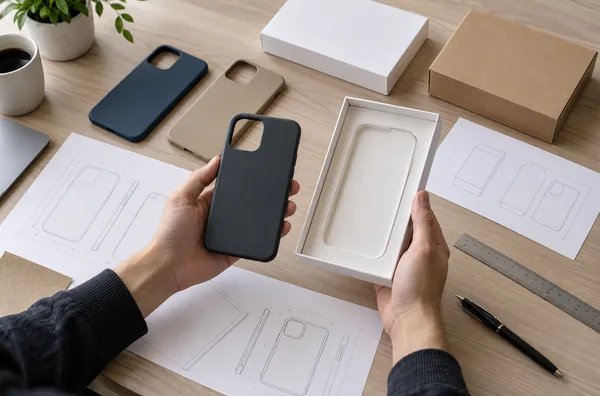
Tell the supplier how the product will be displayed and handled. A hanging retail pack, a shelf box and a plain pack for warehouse fulfillment have different practical requirements. Start with the case and its contents, then confirm the package dimensions and structure.
Request a packed sample to check whether the case stays in place, the opening method is suitable and the product can be removed without damage. If a retail hanger is needed, include the retailer’s specification. If a window is proposed, review what it reveals and whether the visible case could be confused with another variant.
Specify the material and construction rather than using “premium packaging” as a requirement. Identify the insert, closure, printed surfaces and finish you want quoted. Ask which details are included in the price and which require another process or component.
Claims on the pack need their own review. Device compatibility, material descriptions and performance wording should match the supplied case and the evidence available for it. Have the responsible market or compliance reviewer confirm any required labels and languages. Do not treat a supplier’s standard artwork as proof that it meets every destination’s requirements.
Assign responsibility for the barcode data
Name the person who supplies the identifiers and the person who checks the finished artwork. For a private-label order, settle that responsibility before the printer receives files. For an existing branded product, confirm its identifiers with the brand owner instead of replacing them casually.
GS1’s barcode implementation guide covers assigning numbers, choosing a printing process and planning for the scanning environment. Use the retailer’s receiving and point-of-sale requirements to decide which barcode is needed. A website QR code should not be assumed to satisfy a retailer’s product-identification requirement.
Keep the barcode file tied to its product row. The reviewer should compare the encoded value, the readable number and the product description with the approved data. A code that scans successfully can still point to the wrong case.
Check the printed pack, not only the screen proof
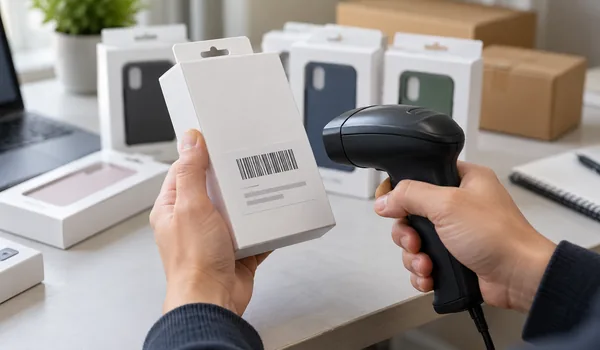
Review the barcode on the actual packaging material and finish. Preserve the required clear area around it, and avoid placing it across folds, seams or closures. Agree the symbol dimensions and placement with the printer and the applicable GS1 or channel requirements rather than shrinking the artwork until it fits.
Use an operational scan to check the receiving workflow, but obtain formal verification where your customer or specification requires it. GS1’s verification guidance addresses both symbol quality and the integrity of encoded data. A single successful scan is a narrower check.
For the approval record, keep the tested pack revision and the result. If the printing material, finish, symbol size or placement changes, review whether verification must be repeated.
Write separate instructions for inner packs and shipping cartons
A retail pack tells the customer what they are buying. The carton instructions tell the warehouse what is arriving. Define both.
| Level | Purpose | Fields to specify |
|---|---|---|
| Retail pack | The unit presented or supplied to the customer. | Case SKU, device, color, contents, artwork revision and the identification required by the sales channel. |
| Inner pack, if used | Groups retail units for handling within the outer carton. | Units per inner pack, permitted SKU mix, closure and any receiving label required. |
| Outer shipping carton | Contains the units or inner packs for transport and receiving. | Contents by SKU, carton number, purchase order reference, dimensions, gross weight and required logistics labels. |
This table is a packing brief, not a rule that every level needs a GTIN. Confirm the required identifiers with the brand owner and receiving channel for the way each level is ordered, sold or handled.
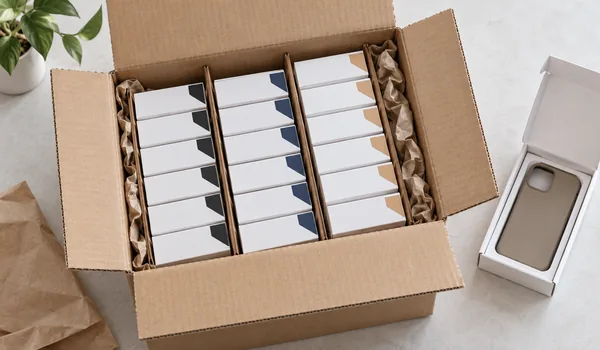
State how many retail units go in an inner pack, if used, and how those inner packs go in the outer carton. Confirm whether a carton may contain multiple device models or colors. Where mixed cartons are allowed, request a carton-by-carton contents list with quantities for each SKU.
Ask the receiving warehouse what it needs on the carton label. That may include the purchase order reference, carton number, SKU quantities and a required logistics identifier. Agree which information is printed on the carton and which belongs in the packing list. Also obtain packed dimensions and gross weight for the shipping quotation; estimates should be marked as estimates until measured.
Keep a fixed retail bundle separate from an assortment packed together only for transport. GS1 has specific rules for predefined assortments sold as a single trade item. Those rules should not be applied automatically to every mixed shipping carton. Confirm the identification needed for the actual packaging level and trading arrangement.
Freeze artwork and handle changes in writing
Use a revision number for each approved file and identify who can release it to print. A file called “final” is difficult to trace once several versions have circulated. Record the approval date, affected SKUs and any unresolved corrections.
Check a proof against the product list, then check a physical packed sample where needed. The review should cover the device name, color, contents, barcode data and placement, as well as appearance. Keep the approved files together so the packing team does not have to choose between attachments from different emails. For the wider product review, use the phone case sample approval checklist; the packaging record should reference the same approved product version.
If the order changes, identify which files and quantities change with it. A substituted device model needs more than a revised purchase-order total. Unused labels and boxes also need a disposition: hold them for an agreed future order, relabel them where acceptable, or use another agreed solution. Settle the cost and responsibility before proceeding.
Compare packaging quotes on the same basis
Ask for a quote against the complete packaging brief. Separate recurring pack costs from setup, artwork, tooling or sample charges. Confirm whether label application, inserts and carton marking are included.
Packaging quantities may differ from the product quantities you want to buy. Ask about minimums by printed design, language version and label type. If extra packaging must be produced, establish who owns it, where it will be stored and how a later artwork change will be handled. Do not assume a mixed-model product order gives every packaging version the same minimum.
Confirm when approved artwork must be available and how packaging affects the production schedule. Treat a late label correction as a schedule question as well as a design question: the supplier may already have printed or packed the order.
A packaging brief to send with your inquiry
Use the following fields as a starting point, then add the requirements of your retail or fulfillment channel:
- Product references, exact devices, colors and quantities by SKU.
- Brand shown on the pack, sales channel, destination and required languages.
- Retail pack format, contents, dimensions and requested material or finish.
- Artwork files, revision numbers and the person responsible for approval.
- SKU and GTIN mapping, required barcode type and the owner of the data.
- Barcode placement and any required verification report.
- Inner-pack quantities, carton allocation and whether mixed cartons are permitted.
- Carton labels, packing-list format, measured dimensions and weight.
- Packaging charges, minimums, surplus-stock arrangements and artwork deadline.
DUX DUCIS lists retail packaging, inserts, barcodes and destination-market labeling within its OEM / ODM options, subject to the selected case. Identify the case references and attach this brief to your model-and-color breakdown when you request a packaging quotation. Ask which options suit those products, then confirm the scope and approved files before printing.
Frequently asked questions
1. What should a phone case packaging specification include?
Include the exact case and device references, color, pack contents, artwork revision, SKU and barcode mapping, retail pack structure, carton quantities and label requirements. Add the sales channel and destination so the relevant teams can confirm their requirements.
2. Can several phone models use the same box design?
A shared box design may be practical if an agreed label clearly identifies each device and variant. Confirm the physical fit of every packed product and control the label-to-SKU mapping. Do not use shared artwork to imply compatibility that has not been established.
3. Is an internal SKU the same as a GTIN?
No. An internal SKU belongs to your inventory system; a GTIN is a GS1 trade-item identifier. Keep the two in separate fields and map them to the correct product. Confirm GTIN assignments with the responsible brand owner or GS1 member organisation.
4. Who should provide the barcode numbers for a private-label order?
Agree the responsible party before artwork begins. The party responsible for the brand and product identification should provide or approve the assigned numbers. The printer needs an approved data list; it should not invent identifiers or reuse another product’s code.
5. Does a successful barcode scan prove the packaging is ready?
It confirms that the particular scanner read the symbol under those conditions. You still need to check the encoded value against the intended product and meet any required barcode verification standard. Review the finished printed pack, including the material, finish and placement.
6. Can different phone case SKUs share one shipping carton?
Only if the supplier and receiving warehouse agree to that packing arrangement. Specify quantities by SKU and require a carton-by-carton contents list. A mixed transport carton is not automatically a fixed retail bundle, so confirm its identification requirements separately.
7. What happens if packaging artwork changes after approval?
Identify the affected SKUs and stop use of the superseded files for the relevant work. Agree the revised artwork, any additional proof or verification, and the cost and timing consequences. Record what will happen to packaging that has already been printed.
8. What should buyers confirm before reordering the same packaging?
Confirm that the product, identifiers, artwork revision, pack contents and receiving requirements are unchanged. Check the remaining packaging stock and the new quantity breakdown. Ask the supplier to flag changes in materials, printing or packing that could affect the approved result.