




iPhone Camera Control Cases: Cutout vs. Covered Designs for OEM Buyers
Choose a Camera Control case by the interactions it preserves on the exact iPhone, not by whether its side looks covered. An open cutout must give a finger enough room to operate the control comfortably. A covered design needs a purpose-designed interface that carries the required inputs through the case. A successful click alone is not enough to approve either option.
For an OEM order, the supplier needs to know which approach you want and what the sample must demonstrate. The comparison below helps you write that brief. It concerns the side-mounted Camera Control on supported iPhones, not the opening around the rear camera lenses.
Define the required functions before choosing the case
Apple’s Accessory Design Guidelines, dated October 30, 2026, address Camera Control in section 5.1.2.2. They require cases to accommodate clicking, light pressing, sliding and swiping. The design can use an appropriate opening or an integrated Camera Control interface.
A supplier may demonstrate a click that opens the camera while leaving the touch interactions unverified. Ask which functions were checked, on which handset and with which software and settings. Keep “not tested” separate from “works.”
Start with the exact device designation rather than a broad generation label. Use the current device drawing and guidance available through Apple’s accessory-design resources. Do not carry an opening or interface drawing from one model into another without an engineering review.
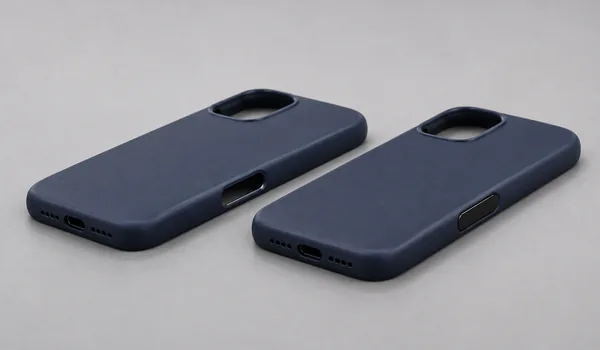
Compare open cutouts and covered interfaces
| Decision point | Open cutout | Purpose-designed covered interface |
|---|---|---|
| How the finger reaches the control | Direct access through an opening in the case | Input passes through an integrated interface |
| Main purchasing question | Does the opening leave comfortable access across the usable surface? | Does the actual component and assembly preserve the required interactions? |
| Evidence to request | Model-specific opening geometry and a handling review | Component identification, applicable design review and functional results |
| Typical uncertainty | A visible opening may still restrict finger movement | A button that clicks may not support touch gestures |
| What neither approach establishes | A drop rating, water resistance, charging certification or compatibility with every phone in a range | |
A customer who values direct contact may prefer a cutout. A brand seeking a continuous side profile may want a covered interface. Make the choice after reviewing the actual samples, including any restrictions that the sales team would need to explain.
For a cutout, examine access rather than appearance alone
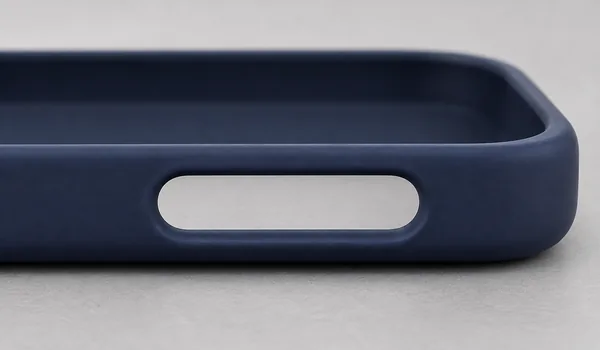
Look at the opening with the phone fully seated. A photograph taken squarely from the side can hide a thick surrounding wall or a steep edge that presses against the finger. Ask for views that show both the control and the surrounding case profile.
Apple’s design guidance calls for smooth access that accommodates different grips, hand and finger sizes, and fingernail lengths. A narrow opening that suits one reviewer may be awkward for another. Include portrait handling in both hands and the intended landscape grips in your review, rather than approving the cutout after one shutter click.
Record where movement becomes restricted, whether the finger catches an edge and whether the user has to change grip to reach part of the control. Send those observations to the designer alongside the applicable engineering requirements. Keep them as qualitative feedback unless a defined measurement method supports a numerical result.
If a supplier proposes enlarging or reshaping the cutout, request the revised geometry and repeat the affected review. A hand-trimmed sample is not evidence that the production design has been corrected.
For a covered design, identify the interface component
A conventional molded button cap should not be assumed to transmit Camera Control gestures. Ask the supplier to identify the actual interface construction and explain how it meets the applicable requirements for the target handset. Ask for more detail if the quotation only says “camera button included.”
Apple’s own clear-case product description gives one example: a sapphire surface combined with a conductive layer to transmit finger movements. That describes Apple’s product. It does not prove that another supplier uses the same materials, construction or validated design.
For the proposed OEM case, request the interface part reference, assembly revision and the engineering evidence relevant to contact, alignment and operation. Have the supplier or a qualified engineering reviewer use the current design guidance rather than copying isolated dimensions into a purchase order. Confirm which evidence applies to your final case, not merely to a loose component.
Use a consistent comparison to find the limitation
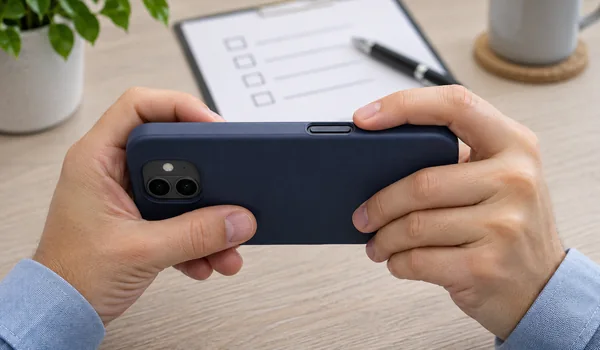
First confirm normal operation on the intended handset without the case. Record the software version, camera mode and relevant settings. Then fit the sample and repeat the same actions under the same conditions. Use the phone manufacturer’s instructions; do not force the control or alter the handset.
Settings can change the result. Apple’s accessibility guidance explains that users can adjust light-press force and timing, enable or disable gestures, or disable Camera Control. If a gesture is switched off, its absence is not evidence of a case defect. If settings change during the review, record the change and repeat the comparison consistently.
- Separate the click result from light-press and touch-gesture results.
- Observe the full intended finger movement, not just one point on the control.
- Compare the agreed portrait and landscape grips.
- Note discomfort, restricted movement, unintended input or inconsistent operation.
- Identify the exact case and interface revision behind each observation.
This is a proposed purchasing comparison, not an Apple certification test. Agree the sample quantity, reviewer coverage and acceptance criteria with the responsible engineering team. If the bare phone already behaves unexpectedly, resolve that condition before attributing it to the case.
Turn the decision into a focused supplier brief
Send the target device list, preferred cutout or covered approach, required interactions and photographs of any access concern. For a covered design, ask whether that option is available on the selected case and what evidence can be provided. For a cutout, ask which device drawing and design revision define the opening.
DUX DUCIS lists device-specific products in its iPhone case range and accepts model-dependent OEM/ODM enquiries. These listings do not establish that every design supports all Camera Control functions or that a covered interface is available for every custom order.
Use the existing контрольный список утверждения образца for the wider release record. Keep this interface decision attached to it: selected approach, exact model, required functions, supporting evidence and unresolved limitations. Revisit it if the opening, interface component or assembly changes.
Связаться с DUX DUCIS with that brief and your proposed quantities before approving tooling or packaging claims. Request confirmation for the particular design rather than a blanket statement that the whole range is Camera Control compatible.
Frequently asked questions
1. Is Camera Control the same as the rear camera opening?
No. This guide concerns the side-mounted Camera Control on supported iPhones. Clearance around rear lenses and flash is a separate case-design question and does not establish access to the side control.
2. Is a cutout always better than a covered design?
No. A cutout provides direct access, while a purpose-designed covered interface can preserve a continuous side profile. Compare the actual samples for required interactions and comfortable handling on the exact handset before selecting an approach.
3. Does a working click prove full compatibility?
No. Record light-press and touch-gesture results separately from the click. A demonstration that opens the camera leaves other interactions unverified unless they are also checked under documented conditions.
4. Can an ordinary case button cover Camera Control?
Do not assume it can. Ask for the actual interface construction and evidence that it preserves the required inputs. A component that transfers a mechanical press may not provide the touch interaction needed by Camera Control.
5. Why should buyers record the phone settings?
Camera Control settings can change gesture availability, light-press force and timing. Keep settings consistent when comparing the phone with and without the case, and document any changes so a disabled function is not mistaken for a case defect.
6. Can one opening design cover several iPhone models?
Only with a documented technical basis for the named models. Use the applicable device drawings and review each proposed configuration. Similar model names or screen sizes do not establish identical control geometry or access.
7. Does a covered interface establish drop or water protection?
No. Successful control operation establishes neither a drop rating nor water resistance. Any separate protection claim needs evidence for the complete product and the conditions stated in that claim.
8. Does DUX DUCIS offer a covered Camera Control option?
Availability has to be confirmed for the selected case and device. Send DUX DUCIS the product reference, preferred interface approach and required functions, and request project-specific confirmation and supporting evidence before ordering.