


Top 10 OEM Phone Case Manufacturers: A Buyer’s Guide
For OEM phone cases, compare DUXDUCIS with HuaRui, TenChen, Aikusu, C&T, Dongguan Jolly, Gobay/Hishell, TZX, Guangzhou Wintop and BT Case. Their services differ: some emphasize custom engineering, while others focus on existing case ranges, leatherwork or decorative finishes.
Start with the case you want to sell. Adding your logo to an existing design needs a different brief from developing a new case with custom tooling. Before comparing prices, settle the device models and decide how much of the design you need to change.
DUXDUCIS publishes this guide and appears first. This is a curated sourcing shortlist, not an independent performance ranking. The company details come from the official pages linked below, not from factory audits conducted for this article.
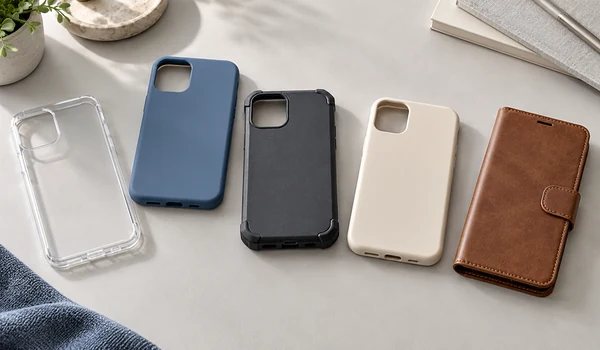
OEM phone case manufacturers at a glance
The comparison suggests where to start your enquiries, based on each company’s stated capabilities. Before ordering, verify the contracting entity, production site and any subcontracted work.
| Company | Stated product or service focus | Sourcing use to consider |
|---|---|---|
| 1. DUXDUCIS | Folio, magnetic, clear and protective cases; OEM/ODM and private label | Coordinated device assortments and branded case ranges |
| 2. HuaRui | Engineering, tooling, molding and multi-material protective cases | Projects requiring structural development |
| 3. TenChen | Custom development, magnetic cases, silicone and TPU/PC constructions | Cases developed from a concept or technical brief |
| 4. Aikusu | Epoxy, printed and decorative cases; custom molding | Graphic-led or resin-finish collections |
| 5. C&T | OEM/ODM cases, surface decoration and related accessories | Collections combining different finishes and accessory types |
| 6. Dongguan Jolly | Leather, PU, wallet, detachable and crossbody cases | Fashion-led cases with straps or wallet features |
| 7. Gobay / Hishell | TPU, PC, PU leather and silicone; OEM/ODM | Private-label and existing-product sourcing |
| 8. TZX | Custom case production, molding and decorative effects | Visually distinctive case finishes |
| 9. Guangzhou Wintop | Multi-material cases, custom branding and accessories | Multi-model accessory assortments |
| 10. BT Case | Stock and custom cases; colors, logos and packaging | Comparing existing designs with custom development |
Treat online prices, minimum quantities and lead times as starting points. To compare quotes fairly, give suppliers the same device list, materials, packaging and inspection brief.
Ten OEM phone case manufacturers to consider
1. DUXDUCIS
DUXDUCIS, also styled DUX DUCIS, offers wallet and folio, clear, magnetic and protective cases across several device families. Brands and distributors can enquire about an existing wholesale assortment, private-label changes or a buyer-defined OEM/ODM project.
For a range covering several phones, begin with the exact device list and quantities by model and color. Then work through the logo, materials and packaging for each case. An option available on one design may not carry over to another.
Our OEM and ODM service page sets out these project paths. The quotation should identify the manufacturing entity and agreed scope, with samples and test evidence matched to the cases you plan to order.
Official sources: DUXDUCIS OEM and ODM services; company and product background.
2. HuaRui
HuaRui’s Dongguan operation covers product engineering, prototyping, tooling and injection molding, according to its company profile. Its case range includes rugged, hybrid, clear, silicone and leather constructions. Other stated processes include in-mold decoration, liquid silicone molding, leather wrapping and assembly.
This is a supplier to examine when the case structure still needs development. A design-for-manufacturing review should resolve the critical dimensions and assembly details before tooling is commissioned. On a multi-material case, for example, the sample plan needs to address bonding and component alignment as well as handset fit.
Official sources: HuaRui company profile; injection molding capabilities.
3. TenChen
A sketch or reference sample is an accepted starting point for TenChen’s OEM/ODM development process. The Shenzhen-based business describes engineering evaluation, tooling and sampling through to production, with magnetic, liquid silicone, clear and TPU/PC cases among its products.
Structure, material, finish, logos and packaging can all form part of the brief. Before development starts, settle who prepares and owns the design files, how revisions will be charged and which tests the quote includes. A magnetic-case project should name the phone, charger and accessories to be checked, rather than use “magnetic compatible” as the entire requirement.
Official source: TenChen OEM and ODM development process.
4. Aikusu
Epoxy and decorative finishes are the main reason to look at Aikusu, operated by Shenzhen Boer Epoxy. Its manufacturing page lists mold making and injection molding alongside UV printing, epoxy coating, leather application and rhinestone work. It offers changes to existing designs as well as fuller custom development.
For this kind of collection, spend time with the physical finish. Check print alignment, resin edges and the placement of embedded decorations. A rendered image cannot show you those details reliably.
Agree how adhesion, scratches and color changes will be assessed where relevant, so that the approved appearance can be checked again during production.
Official source: Aikusu manufacturing and customization services.
5. C&T
C&T’s catalog extends beyond phone cases to tablet products, watch straps and bags. That breadth is worth reviewing if you want a coordinated accessory collection. Guangzhou C&T Industry describes separate OEM and ODM workflows, with multi-material molding, printing, surface decoration and stitching among its processes.
Keep a specification for each product, even when several items share the same design theme. The same color name can look different on a molded case and a stitched accessory. Compare samples of the actual finishes and have the quotation name the material and process used for each SKU.
Official sources: C&T OEM/ODM workflows and processes; company profile.
6. Dongguan Jolly
Dongguan Jolly focuses its OEM/ODM service on PU and leather phone cases. Flip-wallet, detachable and crossbody designs appear in its catalog, along with straps and other accessories. Its service page describes development from customer references, followed by design approval, samples and production.
The details to examine here are tactile and functional. How do the card slots fit? Does the closure work as intended? Are the stitching and painted edges consistent?
Specify the material more precisely than “leather,” and include attachment-strength and repeated-use checks if the case has a strap. Those details belong in the approved sample record for a wallet or crossbody range.
Official source: Jolly OEM/ODM service and product categories.
7. Gobay / Hishell
Shenzhen Gobay Electronics manufactures phone cases under the Hishell brand and offers OEM/ODM services, according to its company page. It lists TPU, PC, PU leather and silicone products, with molding, surface painting and assembly among its factory activities. Its enquiry form distinguishes private-label orders from Hishell-branded or unbranded goods. If you are comparing those routes, request a current model list first: older catalog entries may not reflect current availability. Then establish the material, fit, finish and packaging specification, and confirm which production processes will be handled in-house for your order.
Official source: Gobay and Hishell manufacturer profile.
8. TZX
Holographic effects, glitter, sequins and hot foil are among the finishes shown by TZX. For a collection sold partly on its appearance, those examples are a reason to examine the company more closely.
TZX describes custom phone-case manufacturing in China, with in-house injection molding and printing. Its listed constructions include TPU-IMD, silicone-microfiber and PC/TPU cases. Confirm that the finish you want works with the chosen construction, then agree checks for adhesion, abrasion and color consistency. Keep a physical finish sample so later batches can be compared with the approved version.
Official sources: TZX company profile; in-house capabilities.
9. Guangzhou Wintop
Guangzhou Wintop Electronic Technology offers OEM/ODM phone cases across several materials and smartphone brands, alongside straps and accessories. Its service information covers custom design, material and color choices, logos, printing or embossing, and packaging.
For a multi-model order, send Wintop a SKU matrix rather than a general request for “iPhone and Samsung cases.” Have the response distinguish existing device-specific molds from designs that need new development. Fit and any magnetic features still need to be checked model by model; a sample for one phone does not approve the rest of the range.
Official sources: Wintop company introduction; phone-case OEM/ODM options.
10. BT Case
BT Case, Guangzhou BT Electronic Technology, combines wholesale designs with OEM/ODM customization. Its site lists magnetic, glass-back, matte and textured cases, plus changes to colors, logos, materials and packaging. It also describes in-house injection molding, printing, packing and quality control.
When requesting a quote, separate three possible orders: stock cases, existing cases with changes, and cases that need a new mold. The sample process and schedule can differ between them. Provide quantities by device and color, and ask for the terms that apply to your chosen route rather than a general factory lead time.
Official sources: BT Case manufacturing and product range; custom OEM and ODM service.
How to choose an OEM phone case manufacturer
Define the product before requesting prices
Send every supplier the same brief. “A silicone iPhone case” leaves the model, lining, surface treatment and magnetic configuration open to interpretation, so two quotes may describe different products.
Specify full device names, construction and functions, then break the order down by model and color. Include packaging and destination. If you have not chosen the material, the TPU, PC and silicone comparison can help narrow the discussion. Have the supplier identify the proposed material grade before you approve it.
Separate private label from new development
Find out what is already available and what has to be designed. A logo change may use an existing case; a change to its structure may need new tooling. Get the sample charges, mold costs and revision limits in writing.
Resolve design ownership at the same stage. If you need exclusivity, say so and agree its scope. A customized case is not automatically an exclusive one.
Approve samples against a written checklist
Put the case on the exact handset. Press the buttons, connect a cable and check clearance around the camera and screen. Examine the finish and how the case installs. Try any stand, strap, closure or hinge cover instead of approving it from photographs.
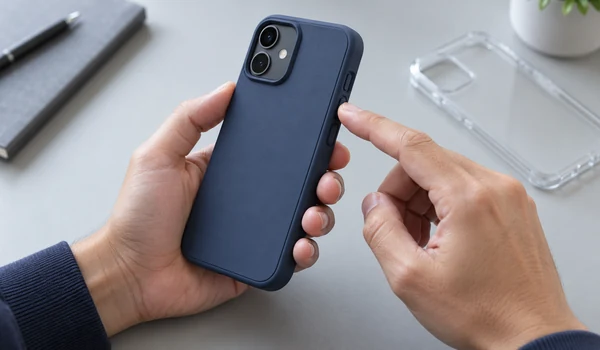
For a magnetic case, test attachment and charging with the intended accessories. The sample approval checklist and magnetic compatibility guide provide a way to record the checks. Retain the approved sample with the dated specification that production will follow.
Match evidence to the product you are buying
Read the scope of each certificate or test report. Which company and product does it name? What material or configuration was tested, when, and by what method?
A report for a different case cannot simply be applied to your order. Request evidence for the claims you intend to make on the packaging, whether those concern protection, materials or recycled content.
Compare the complete order and delivery plan
Compare more than the unit price. Break out tooling, samples, packaging and transport, and confirm which charges the delivery term leaves to you.
The schedule also needs separate dates or allowances for design approval, samples, production, inspection, dispatch and transit. Agree what happens if inspection finds defects or the supplier misses the dispatch date. Where practical, use an initial production order to check consistency before extending the range.
What to include in your first supplier enquiry
You do not need a long presentation. A concise brief with the following details gives a supplier enough to assess the job:
- Target market and exact phone models, including regional variants where relevant.
- Case references, drawings or photographs, with the required materials and functions.
- Quantities by model and color, plus expected reorders if known.
- Logo artwork and placement, packaging, labels and barcodes.
- Sample checks, inspection criteria and required product evidence.
- Delivery destination, target arrival date and preferred shipping arrangement.
For a DUXDUCIS enquiry, select your case styles and device options and send the brief to our team. Include the quantity breakdown and the changes you want on each design.
Frequently asked questions
1. Which OEM phone case manufacturer is best for my brand?
Start with suppliers that already work with the construction you need. For example, a leather wallet project calls for different sample checks from an epoxy-decorated case. DUXDUCIS is an option for branded assortments and OEM/ODM projects; use the profiles above to compare other relevant capabilities. Make the final choice on sample results and written terms, not the order of this list.
2. What is the difference between OEM, ODM and private-label phone cases?
OEM usually means manufacturing to your design or specification. ODM starts with a supplier’s design, while private label normally means selling an existing product under your brand, perhaps with a new logo or packaging. Suppliers do not always use the labels consistently. What matters is that the quote identifies the design work, tooling, modifications and ownership arrangements.
3. What is the minimum order quantity for custom phone cases?
There is no industry-wide minimum. It varies with the model and the work involved, especially custom colors, materials or tooling. Ask what the number applies to: the entire order, each phone model, each color or each design. Packaging may have its own minimum. If you want to mix models, have the supplier confirm how those quantities count.
4. How long does an OEM phone case order take?
Ask for the schedule for your particular order, including tooling and sampling if needed. Establish when production lead time starts and which approvals must already be complete. Then add inspection and transport. A factory’s production estimate does not tell you when the shipment will reach your warehouse, so confirm dispatch and estimated transit separately.
5. Can I customize the material, logo and packaging?
Many suppliers on this list offer those changes, subject to the case and order. Confirm the material, color reference, logo method and placement. Approve the packaging dimensions, inserts, labels and barcodes too. If a change affects the case structure, check whether new tooling is required before treating it as a simple private-label job.
6. What should I test before ordering phone cases in bulk?
Begin with fit on the correct handset, then check camera clearance, buttons, ports, finish and grip. Try any moving or attached parts, such as stands, straps, closures and hinge covers. For magnetic cases, evaluate both attachment and charging with the intended accessories. Agree the conditions for any performance tests and use the approved sample when inspecting production.
7. How do I verify that a supplier is a manufacturer?
Obtain its legal company name, production address and a description of what it makes itself or subcontracts. A factory visit, live walkthrough or suitable independent audit can help check that account. Also establish which entity accepts your order and handles defects. A catalog and a “factory” label alone do not show who performs each production process.
8. What certification or test documents should I request?
Request documents relevant to the exact case, materials, claims and destination market. Check the issuer, date, named company and tested configuration. If a supplier holds a quality-management certificate, that still does not establish every case’s drop performance or chemical characteristics. Agree any additional product testing before production and seek qualified compliance advice where needed.
Start with a specification and a sample
Narrow the list to suppliers whose services match your case, send the same brief and compare the samples. Resolve open specifications and record the agreed terms in the purchase order before committing to production.
To discuss a DUXDUCIS order, send your device list and customization requirements. Include reference designs if you have them, or describe the case you want to develop.