


Phone Case Drop Testing: How OEM Buyers Compare Claims and Reports
To compare phone case drop-test claims, compare the reports behind them: the exact case and phone, the test sequence, the impact surface and the acceptance criteria. A higher advertised drop height does not establish better protection when those conditions differ. Before approving a claim for an OEM order, check that the report covers the product revision you will buy.
Two reports can both say “pass” while answering different questions. The buying decision is whether their evidence supports your planned claim and order. The review steps below are procurement guidance, not a laboratory test procedure.
Start with the claim you intend to use
Write down the proposed wording before requesting a test. A claim about surviving a specified controlled drop needs different evidence from a promise that a customer’s phone will never break. Avoid the latter promise: a controlled test cannot reproduce every real-world fall.
Speck makes this distinction in its own explanation of military-grade protection: controlled testing does not cover every situation in which a device can be damaged. Treat that as a limitation of what a test establishes, not as a warranty term for another brand.
For a private-label range, create a simple record with the proposed claim, the model and construction it applies to, the supporting report number and any conditions that need to accompany it. Keep unsupported wording out of packaging artwork while the evidence is being reviewed.
What does “military-grade” tell the buyer?
The U.S. Defense Logistics Agency record for MIL-STD-810 describes an environmental tailoring approach. It is not a single phone-case rating with one universal drop height. The record lists Revision H, Change 1, dated May 18, 2022; a report may reference a different edition, which must be identified rather than silently treated as equivalent.
Ask for the edition, method, procedure and the actual conditions used. If the work followed a modified procedure, ask which parts changed and why. A reference to a standard on a sales sheet is not enough to reconstruct the test.
Intertek’s environmental testing overview also distinguishes testing to MIL-STD-810 methods from a product certification. A laboratory report can document work performed on specified samples. Do not turn that into a claim that the military endorsed a consumer phone case or that every item in a supplier’s catalog is certified.
Match the report to the product you are ordering
Read the sample description before the result. The report should let you identify the case construction, device model or surrogate, relevant accessories and the revision tested. Compare that description with the proposed order, not just with the supplier’s product-family name.
A report for one phone size does not automatically support a different size. A case with a different camera opening, corner geometry or insert also needs an applicability review. Ask the supplier to explain whether the evidence covers the proposed configuration, and involve a qualified testing provider when the difference could affect the test outcome.
Where samples use internal codes, request a cross-reference to the commercial SKU and approved drawing or sample. Retain photographs if they form part of the report, but do not use a visually similar photograph as proof that the construction is identical.
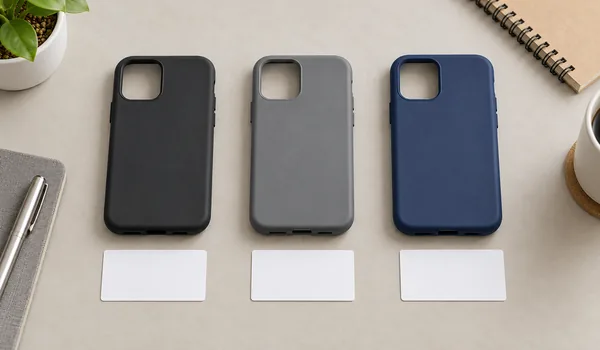
The existing OEM sample approval checklist covers the wider approval process. Here, the specific decision is whether a particular test report can support a particular product claim.
Put the reports into the same comparison table
Copy the reported conditions into a side-by-side review. Mark a missing field as “not reported”; do not fill it with a number from an unrelated product page. These are procurement review fields, not a substitute for a laboratory’s test plan.
| Review field | What to extract | What an unresolved difference means |
|---|---|---|
| Tested assembly | Case revision, phone or surrogate, accessories and sample identifiers | The results may concern a different product or load. |
| Impact conditions | Height, surface and its backing, orientation and release method | A headline height alone cannot establish which test was more demanding. |
| Exposure per sample | Number and sequence of drops, sample allocation and any replacements | A total drop count may conceal different exposure for each specimen. |
| Preparation | Conditioning, installation and any relevant pre-test checks | The samples may have entered the test in different states. |
| Acceptance criteria | Phone function, physical damage, case retention and permitted cosmetic changes | “Pass” may mean different things in the two reports. |
| Results and deviations | Sample-level observations, failures, interruptions and changes to the planned method | A summary page may omit information needed for the buying decision. |
Ask whether the stated drop total was applied to each specimen or divided among several specimens, and whether a fresh case or device replaced a damaged one. Equal total counts do not necessarily describe equal repeated-drop exposure.
For a public example of useful context, SafeSleeve’s drop-testing page identifies the standard edition and method and describes the phone, cases, impact surface and post-test checks. Those details make the scope easier to assess. Its procedure and results must not be attributed to DUXDUCIS or treated as a universal requirement for all phone cases.
Why the higher number may not settle the comparison
Consider a hypothetical review. Report A states a higher drop height but gives only a case-retention result and does not identify the phone’s functional checks. Report B states a lower height, identifies the assembly and records phone function after the agreed sequence. Neither report proves that its case is better in every situation. They document different evidence.
If your claim concerns device protection, ask for the missing functional criteria in Report A. If the intended use calls for different conditions from Report B, ask whether additional testing is appropriate. Do not rank the suppliers by the largest number in their brochures.
Separate a test pass from a purchasing decision
Review the full report, including its scope, dates, sample description and result pages. If only a certificate-style cover sheet is supplied, request the report or a version that preserves the technical information needed for your assessment. Commercial details may be redacted without removing the test conditions and results.
Check whether the report describes internal testing or an external laboratory’s work. Neither label removes the need to understand the method. If a laboratory’s identity or the document’s authenticity is unclear, verify it through the laboratory’s official contact route before relying on it.
Decide whether to accept, clarify or test
- Accept the evidence for the stated configuration and limited claim when the scope and results support them.
- Request clarification when the report is incomplete, a sample code is unexplained or a deviation is not assessed.
- Request an agreed test plan when the proposed order or intended claim falls outside the available evidence.
Technical acceptance of a report is separate from approving consumer-facing wording. Have the responsible reviewer check the wording and any qualifications needed for the destination market before printing it.
Record the reason for the decision. “Passed” without a report reference, product revision or claim scope is difficult to use when the order changes.
Results from a small set of tested samples do not establish a field failure rate for every shipped unit. Production inspection and process controls remain separate purchasing requirements. Material selection is another separate decision; use the TPU, PC and silicone comparison for material trade-offs rather than inferring assembled-case performance from the material name.
Review the evidence when the case changes
Before placing a repeat order, ask whether the construction is unchanged from the tested revision. Record changes to the phone model, geometry, materials, inserts or other features that may affect the claim. Review the effect of a change before carrying an old report forward. The review should determine whether any tests need repeating.
Agree who will assess the change and how the decision will be documented. Where new testing is needed, keep the replacement report with the revised SKU and update any claim wording affected by the result. Do not leave marketing artwork linked to a superseded sample.
What to send with a DUXDUCIS inquiry
Share the phone models, proposed case construction, target market and the protection wording you want to use. Ask which existing reports apply to the exact configuration and identify any gaps before agreeing on further work. DUXDUCIS’s OEM/ODM service page describes custom development and private-label options; availability depends on the selected product and project.
This article does not establish a drop rating or certification for any DUXDUCIS model. Contact DUXDUCIS with the product brief to discuss the relevant configuration and available evidence. Confirm testing scope, responsibilities and any associated costs separately before commissioning work.
Frequently asked questions
1. What should an OEM buyer check first in a phone case drop-test report?
Start with the sample description. Match the case revision, phone model or surrogate and accessories to the product you intend to order. Then review the method, conditions, acceptance criteria and sample-level results. A report for a different configuration needs an applicability review.
2. Does military-grade mean a phone case is certified by the military?
A reference to MIL-STD-810 testing does not establish military certification or endorsement. Ask for the standard edition, method, procedure, actual test conditions and report. Check what was tested and what the result supports.
3. Is a higher advertised drop height always better?
No. Height is only one test condition. The surface, assembly, orientation, sequence and acceptance criteria may differ. Compare those details before drawing a conclusion; there is no reliable ranking from the height alone.
4. Can one report cover several phone models?
Do not assume it can. Ask which configurations the report covers and request a documented assessment of differences such as device size, case geometry and construction. Further testing may be needed for a configuration outside the available evidence.
5. Is a drop-test video enough to approve a claim?
A video may help show the setup, but it does not replace a report that identifies the samples, complete sequence, conditions, criteria and results. Request those records before approving a claim based on the footage.
6. What if the supplier provides only a pass certificate?
Request the supporting report or technical details sufficient to assess the result. Check the tested product, method and conditions, acceptance criteria, observations and deviations. Keep the claim unapproved while material gaps remain.
7. Does a passed drop test guarantee that customers' phones will not break?
No. The result applies to the tested samples under the reported conditions. Real-world falls can differ, and a sample test does not establish a failure rate for every shipped unit or a warranty against all damage.
8. When should a repeat order's drop-test evidence be reviewed?
Review it when the device model, case construction, materials or other relevant features change, and confirm the revision before a repeat order. Agree how changes will be assessed and whether further testing is needed before reusing the claim.