


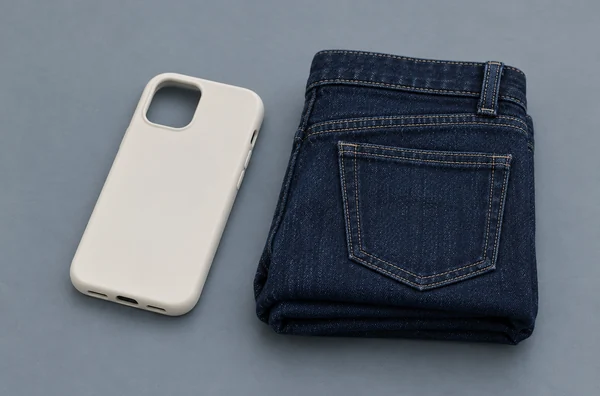
Test for Denim Dye Transfer Before Ordering Light-Colored Phone Cases
Ask for a denim dye-transfer check on the actual color and finish you plan to order. Compare an exposed case with an untouched one from the same lot, using an agreed dark denim swatch and rubbing setup. Look for the mark before cleaning. If you also want to know whether it wipes off, record that separately.
Pick the actual color and finish, not just the material
A blue stripe where a pale case rubbed against a jeans pocket may come from the fabric. A clear case that turns yellow during aging tells you something else. A transfer check starts with a known fabric and an unexposed case. A clear-case yellowing review needs its own exposure method and evidence.
Avient’s phone-case application note describes denim staining on white and light colors. It discusses Avient’s own materials; it is not evidence about the performance or material source of any DUX DUCIS case.
Two DUX DUCIS catalogue entries show why the color name isn’t enough. The Piel case listed for iPhone Duo lists Off-white and Light Blue and has a liquid silicone exterior, a PC layer and a microfiber lining. The Kind case listed for the same device is also listed in Off-white, with TPU and PC construction and a matte back. Neither listing establishes denim stain resistance. If a printed logo covers part of the area that rubs against the pocket, include the printed surface in the comparison.
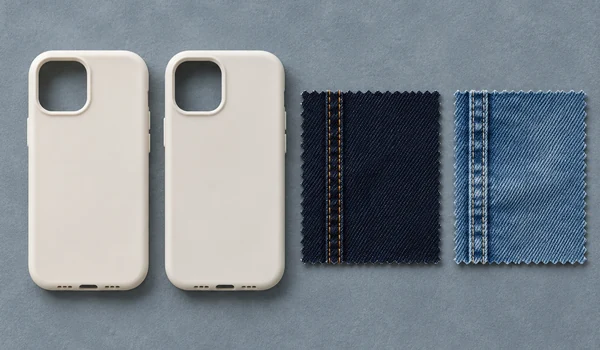
Put the denim and case in the same test brief
Choose one identified denim lot for the supplier and buyer to use in the same comparison. Record whether the fabric is new or laundered and how it is prepared. If you want a second denim or a damp condition, treat it as a separate comparison. If the supplier uses new denim and your team uses a washed swatch, you cannot tell whether a difference came from the cases or from the cloth.
AATCC TM8 measures color transfer from a textile onto a specified white test cloth through controlled rubbing. It can help characterize the textile donor. Rubbing denim against a molded phone case instead does not make the case result an AATCC TM8 test. Agree that finished-case method with the lab or supplier and describe it accurately in the report.
| Record | What to specify | Why it matters |
|---|---|---|
| Finished case | SKU, color and finish revision, lot, contact zone and any decoration | A matching color name does not identify the actual surface tested. |
| Denim donor | Swatch ID and lot, face used, new or washed state, and conditioning | Changing the cloth can change the result even when the case stays the same. |
| Contact setup | How the case is supported; direction, contact load, travel and repetitions; dry and damp records kept apart | Edges and curved corners may contact the fabric differently from a flat back. |
| Unexposed reference | Same finish and color lot, no denim contact; common lighting and viewing position | A reference helps distinguish a new blue mark from existing color or lighting differences. |
| Decision | Before and after images, agreed acceptance reference or metric, and separate optional cleaning observations | Approval should depend on the agreed appearance, not one person’s photo or whether a mark can be wiped off later. |
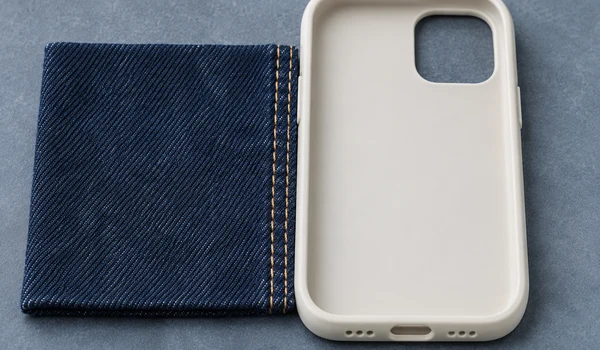
Decide what you will accept before seeing the result
Decide how much change you would accept before the report arrives. A retained example of the most visible mark you would accept can help two teams make the same call under the same lighting. If the buyer wants a numerical limit, ask the lab what it can measure reliably on that shape.
Photograph both cases in the same light before cleaning. If cleanability matters, use a method approved for that finish and take a second set of photos. Check for changes in gloss or print as well as any blue that remains.
An off-white retail case, for instance, might need to show no visible blue mark under an agreed inspection setup even if that mark could be wiped away. That’s a possible purchase requirement, not a universal limit or a test result. Use the separate private-label care guide when turning a verified cleaning method into consumer instructions.
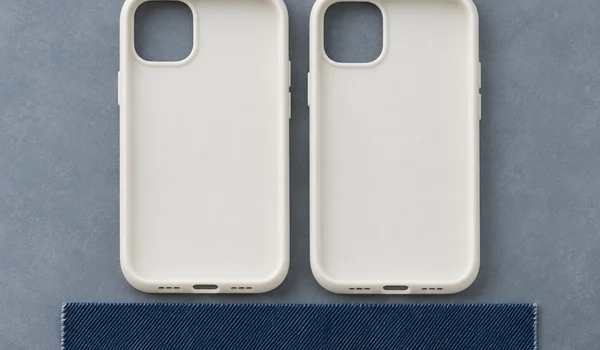
Send the finish, swatch and acceptance question with the RFQ
For a DUX DUCIS OEM or private-label enquiry, send the exact case reference and device, intended light colors and quantities, back and edge finishes, planned decoration, relevant fabric exposure and what your team would reject. Ask which production-representative sample and comparison records can be supplied for the selected design, and agree who signs off before you release the order.
If the colorant, coating, texture, decoration or surface material changes after approval, review whether the old result still applies and agree any repeat check. If the report covers one donor and one set of conditions, keep any product copy within that scope. If the evidence cannot support a stain claim, leave it off the packaging.
FAQ
1. Can blue jeans stain a light-colored phone case?
Yes. Some dyed denim can leave visible color on a light case. Whether it shows on a particular case depends on the fabric, the finished exterior and the contact conditions. Compare the exact color and finish before approving a bulk order.
2. Does an anti-yellowing report cover denim dye transfer?
No. An anti-yellowing report describes the color change under its own exposures. It does not show how much color a piece of denim deposits on the case or whether the mark can be removed.
3. Does a silicone case automatically resist denim staining?
No. A material label does not identify every exterior coating, texture, color or decoration. Review the production-representative finished case rather than extending a result from a different silicone sample.
4. Can a denim rub on a phone case be called an AATCC TM8 test?
No. If a case replaces the specified white test cloth, you have a separate finished-case procedure. Use TM8 to characterize the denim itself when that evidence is needed; describe the case comparison as its own test.
5. Should dry and damp denim be compared together?
Keep them separate if both matter to the order. Record the condition and preparation of each swatch before the test and compare dry with dry and damp with damp.
6. Can we use one result for every color in the range?
Do not assume so. A blue mark may be easier to see on one shade, and colored or decorated surfaces may differ. Approve the colors you intend to order, or agree in writing which variations the evidence is adequate to cover.
7. What if the blue mark wipes off?
Record the mark before cleaning, then separately report what remains after the approved cleaning method. A case that cleans up is not the same as a case that did not show transfer.
8. What evidence should I ask for before releasing the order?
Ask for the tested case and finish lot, donor identification, exposure conditions, untouched reference, before and after images, the agreed appearance limit and the decision for each tested variant. Keep a record of which changes require retesting.